


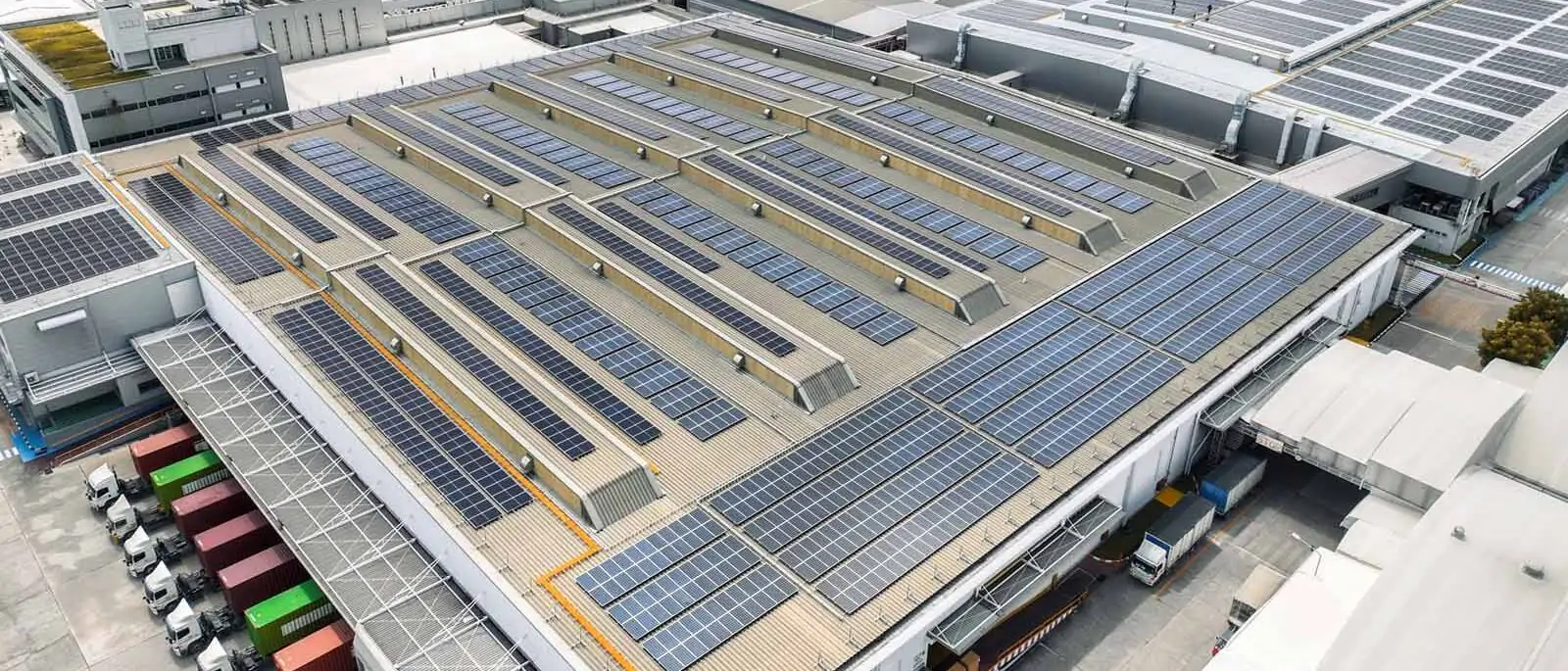
A distribution center is a hub in a logistics distribution network. Goods arrive here, are stored or handled directly, and are prepared for onward distribution to retailers, wholesalers, or end customers. It can be designed as a warehouse, a transshipment center, or a combination of both. Typically, a distribution center combines storage, the movement of goods, and transshipment to different modes of transportation.
What is a distribution center?
A distribution center is geared toward the redistribution of goods. Unlike a pure stock warehouse, it is generally demand-driven: It processes incoming orders and prepares shipments for the next stop in the network.
Several terms are commonly used to refer to the same facility:
- Verteilzentrum or Warenverteilzentrum: German terms, used, for example, for the regional locations within a network.
- Distribution Center (DC): the English term. Depending on the purpose, it is also referred to as Fulfillment Center (shipments to end customers) or Cross-Dock Facility (transshipment with little or no inventory).
- Distribution Warehouse (Distribution Warehouse): emphasizes the warehousing function, i.e., the storage and preparation of goods for distribution to various recipients.
Position in the Distribution Network
The vertical distribution structure describes how many warehouse levels a network has. It is common to distinguish between four levels: plant warehouse, central warehouse, regional warehouse, and delivery warehouse. Depending on the network, a distribution center can assume the role of a central warehouse or a regional distribution center.
The number of levels and locations is a matter of balancing factors. Delivery warehouses are at the lowest level and are directly assigned to a sales district. Having more delivery warehouses reduces transportation costs but increases the fixed costs of the warehouses and the capital tied up in inventory. The structure therefore depends on the lead time customers expect and the resulting distribution costs.
More on this: Transportation Logistics – Distribution Networks, Logistics Networks: Overview and Distribution Logistics.
Storage, Transshipment, or Both
The amount of inventory a distribution center holds depends on its design:
| Type | Inventory | Operations |
|---|---|---|
| Warehouse-oriented | Goods are put into storage and retrieved on an order-by-order basis | Goods receipt, putaway, storage, order picking, shipping |
| Transshipment-oriented (cross-docking) | No inventory or only minimal inventory | Unloading, sorting by destination, loading at the shipping doors |
| Combined | Stocked inventory plus transshipment goods | Both processes at a single location |
In cross-docking, goods move directly from receiving to shipping with no or minimal interim storage. This process is suitable for large volumes with high throughput. It requires stable supply chains, precise planning, and reliable IT.
Functional Areas in the Distribution Center
Within a distribution center, the process is divided into the functional areas goods receiving, storage, order picking, packaging, and goods shipping. VDI Guideline 4490 further subdivides the route between the goods-in and goods-out docks:
- Goods Receiving with Quality Assurance: Acceptance and inspection of delivered goods.
- Returns: Returns as a separate process area.
- Putaway: Goods are placed in their storage locations.
- Storage and Replenishment: Inventory is maintained and supplied to the picking stations.
- Picking and Picking: Items are retrieved based on orders.
- Packaging: Shipments are prepared for dispatch.
- Shipping: Goods leave the distribution center via the outbound area.
In the literature, order picking is considered the central process of most distribution and logistics centers. According to VDI 3590, picking is the process of assembling specific sub-sets (items) from a provided total quantity (assortment) based on orders. In this process, the goods are transferred from a warehouse-specific state to a consumption-specific state. The four basic functions are retrieval, movement, removal, and delivery.
The overview of warehouse management illustrates how these areas are interconnected via interfaces.
Control via Warehouse Management and Material Flow Control
The processes in the distribution center are controlled across multiple IT levels. VDI Guideline 3601 defines warehouse management as the control, monitoring, and optimization of warehouse and distribution systems. The basic functions of warehouse management include inventory and storage location management, as well as material handling equipment control and scheduling.
The guideline classifies the Warehouse Management System (WMS) within a system landscape:
- ERP system (Enterprise Resource Planning): overarching enterprise software.
- WMS: manages inventory and storage locations and generates transport orders.
- Material flow control (material flow computer): converts transport orders into movement commands in automated systems.
- PLC (Programmable Logic Controller): directly controls conveyor systems and warehouse equipment.
More on this: Modern Material Flow Control and Material Flow Control as a Service for a Distribution Center.
Key Performance Indicators for Distribution Centers
Key performance indicators (KPIs) enable the assessment and planning of internal operational costs and revenues for a transshipment and storage facility. VDI Guideline 4490 addresses operational logistics KPIs for internal logistics in warehouses and distribution centers between the goods-in and goods-out docks. It includes key performance indicators for goods receipt, returns, putaway, warehousing, order picking, packaging, shipping, and returnable containers.
In addition, VDI 4400 Sheet 3 defines key performance indicators that measure the efficiency of logistics in the distribution of general cargo, regardless of industry. These can also be used for internal controlling. Examples:
| Key Performance Indicator | Area | Basis |
|---|---|---|
| Average turnaround time in goods out | Goods out | VDI 4400 Sheet 3 |
| Picking order items per employee hour | Picking | VDI 4400 Sheet 3 |
| Average processing time for goods receipt | Goods receipt | VDI 4400 Sheet 1 |
| Goods Receiving Items per Employee Hour | Goods Receiving | VDI 4400 Sheet 1 |
| Lead Time Compliance | Picking, Finishing, Packaging | Practical Scale |
Picking, value-added processing, and packaging play a key role in meeting throughput time targets. A single metric is neutral on its own. It only becomes meaningful for management purposes within a metric system that correlates multiple values. Related metrics: order throughput time and material throughput time.
Frequently Asked Questions
What is the difference between a warehouse and a distribution center? A warehouse stores inventory. A distribution center can store, handle, or do both, and is geared toward redistribution to the next station in the network.
Is a goods distribution center the same as a distribution center? Yes. “Goods distribution center” and “distribution center” are common German terms for the same facility.
What does “distribution center” mean? “Distribution center,” or DC for short, is the English term for a distribution center.
How does cross-docking differ from a traditional distribution center? In cross-docking, goods are routed directly from goods-in to goods-out with no or minimal interim storage. A traditional distribution center also stores inventory.
Summary
A distribution center combines storage, material flow, and goods handling at a hub in the distribution network. Depending on the network, it serves as a central or regional warehouse and operates in a storage-oriented, handling-oriented, or combined manner. Its functional areas range from goods receipt to shipping. Key performance indicators based on VDI 4490 and VDI 4400 help measure and plan costs, revenue, and throughput times in these areas.
