


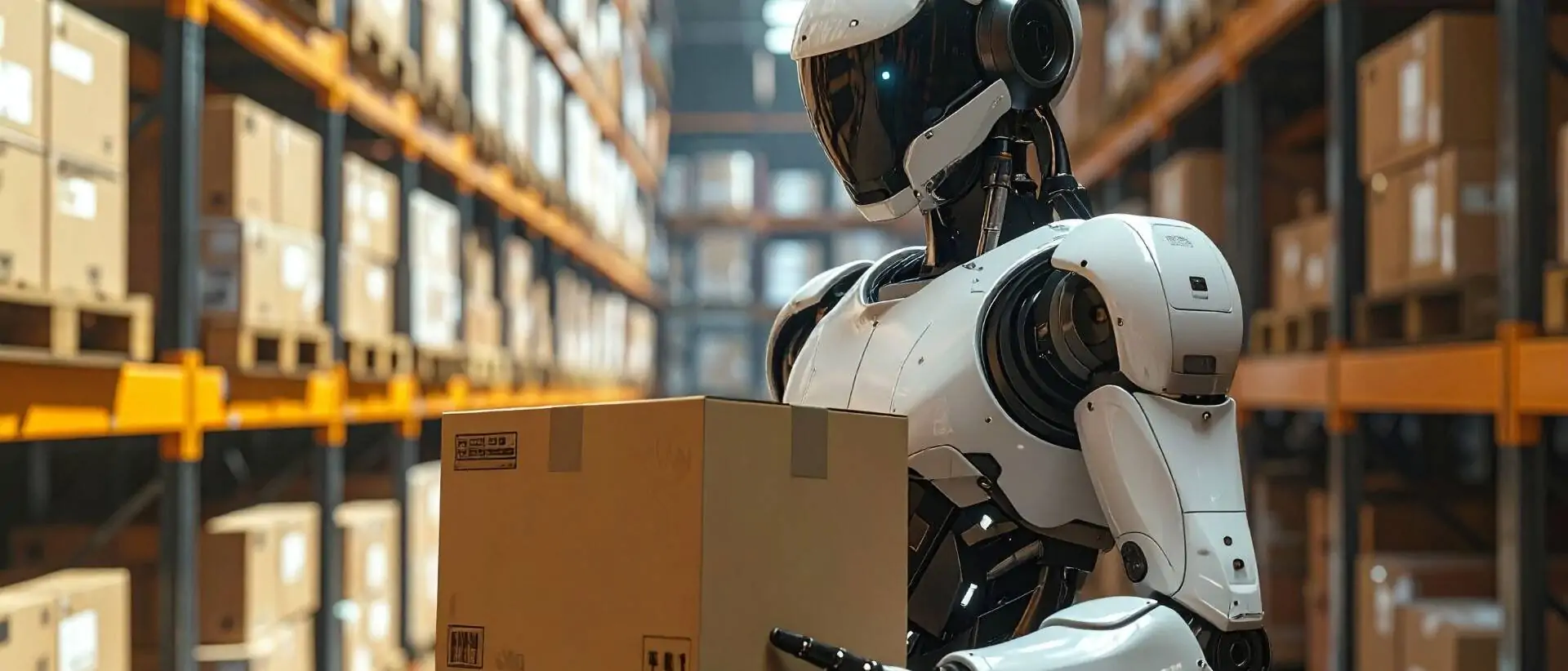
Humanoid robots are among the most ambitious developments in modern robotics. Unlike traditional industrial robots, which are typically stationary and specialized for a single task, humanoid systems are modeled after the human body. They often feature two legs or mobile platforms, arms with multiple degrees of freedom, gripping hands, camera systems, and sensors for spatial perception. The goal of this development is to create machines that can move flexibly in human-designed work environments and perform a variety of tasks.
Interest in humanoid robots is growing significantly, particularly in warehousing, production, and logistics. Companies worldwide are under pressure: rising labor costs, a shortage of skilled workers, aging populations, and increasingly complex supply chains are driving up the demand for automated solutions. At the same time, advances in artificial intelligence, sensor technology, and battery technology are enabling new application scenarios that were considered unrealistic just a few years ago.
Historical Development
Industrial robotics began as early as the 1960s with simple robotic arms that performed repetitive tasks such as welding or painting. These systems typically operated behind safety grilles and had limited adaptability. It was only with advances in computer technology and machine learning that the vision of robots capable of acting with human-like flexibility emerged.
Early humanoid robots were used primarily for research purposes. Systems like Honda’s ASIMO humanoid robot were the first to demonstrate balanced walking, stair climbing, and simple interactions with humans. Nevertheless, for a long time, these machines remained too expensive, too slow, and energy-inefficient for everyday industrial use.
Since the 2020s, development has accelerated significantly. Companies in the fields of automation, artificial intelligence, and electric mobility are investing heavily in humanoid robotics. Modern systems feature powerful neural networks, three-dimensional environmental recognition, and fine-motor gripping mechanisms. As a result, practical applications in industry and logistics are becoming increasingly realistic.
Applications of humanoid robots in warehousing
Warehouses are among the most important locations for humanoid robots. Modern e-commerce structures demand high speed, constant availability, and flexible order processing. Human workers often reach their physical limits in these environments.
Humanoid robots can perform various tasks:
- Picking goods
- Transporting small loads
- Sorting packages
- Loading and unloading shelves
- Inventory tasks
- Assistance with returns processes
A key advantage of humanoid systems is that existing warehouse infrastructures do not need to be completely rebuilt. Since warehouses were originally designed for humans, humanoid robots can theoretically use the same pathways, shelves, and tools. This distinguishes them from specialized material-handling robots, which often require a customized infrastructure.
The ability to navigate autonomously is particularly relevant. Using cameras, LiDAR systems, and AI-powered object recognition, humanoid robots can detect obstacles and react dynamically to changes. Modern systems also learn from experience and continuously improve their movement patterns.
The Importance of Humanoid Robots for Manufacturing
Numerous robots are already in use in industrial manufacturing. However, humanoid robots open up new possibilities, particularly in high-variety production and smaller batch sizes.
Traditional robotic systems are often highly specialized. If a product is modified, the entire production line must be adjusted. Humanoid robots, on the other hand, can respond more flexibly. Thanks to artificial intelligence and sensor-based control, they are capable of handling different workpieces and performing complex assembly steps.
Possible tasks in production include:
- Assembly work
- Quality control
- Material transport
- Machine operation
- Packaging
- Maintenance support
A key advantage lies in human-robot collaboration. Modern humanoid systems are increasingly working directly alongside humans without rigid safety barriers. Sensors detect movements and prevent collisions. This creates so-called collaborative workstations where humans and machines combine their respective strengths.
Humans remain particularly strong when it comes to creative decision-making, problem-solving, and unpredictable situations. Robots, on the other hand, excel in precision, endurance, and consistent quality.
The Role of Humanoid Robots in Logistics
The global logistics industry is under enormous pressure to improve efficiency. Deliveries must be faster, cheaper, and more reliable. At the same time, global crises, supply bottlenecks, and rising energy costs are creating additional challenges.
Humanoid robots can be deployed throughout the entire supply chain. In distribution centers, they handle sorting and transport tasks. At transshipment points, they assist with loading packages or handling heavy goods.
In the long term, humanoid systems could also work in so-called “dark warehouses”—fully automated logistics centers without a permanent human presence. There, robots could work around the clock and organize processes largely autonomously.
Another area of the future is so-called “last-mile logistics.” Here, humanoid robots could deliver packages right to the front door or transport them within large building complexes.
Technological Foundations of Humanoid Robots
Humanoid robotics combines numerous technical disciplines:
Artificial Intelligence:
AI systems enable object recognition, motion planning, and decision-making. Modern neural networks help robots interpret complex situations and learn from experience.
Sensor Technology:
Cameras, depth sensors, force sensors, and LiDAR systems provide information about the environment. This allows robots to recognize people, measure distances, and grasp objects with precision.
Actuation:
Motors and hydraulic systems provide movement. Balanced walking on two legs is particularly challenging, as the robot must constantly adjust its balance.
Power supply:
Battery technology remains a challenge. Humanoid robots require a lot of energy, especially for locomotion and grasping movements. Improved batteries and energy-efficient drives are therefore considered key technologies.
Advantages of humanoid robots
Humanoid robots offer numerous potential advantages:
- Flexibility: They can be deployed in existing work environments.
- 24/7 operation: Robots do not require breaks or shift changes.
- Relief for employees: Physically demanding or monotonous tasks can be automated.
- Greater precision: Error rates can be reduced.
- Scalability: Companies can flexibly expand their capacity.
Humanoid robotics is viewed as an economically significant solution, particularly in regions with labor shortages.
Challenges and Criticism
Despite significant progress, considerable problems remain.
High costs:
The development and acquisition of humanoid robots is expensive. Many systems are still in the pilot project phase and are not economically viable everywhere.
Technical limitations:
Humans possess exceptional fine motor skills and situational adaptability. Even modern robots struggle with unstructured environments or unexpected situations.
Safety concerns:
Since humanoid robots interact directly with humans, high safety standards must be maintained. Erratic movements or system failures could be dangerous.
Social implications:
Increasing automation raises questions about the future of human labor. Critics fear job losses, particularly in simple tasks. Proponents, however, argue that new career fields will emerge and that people will be relieved of strenuous work.
Future Prospects for Humanoid Robotics
Despite significant progress, the development of humanoid robots is still in its infancy. However, experts expect these systems to become significantly more powerful and affordable in the coming decades.
Key future trends include:
- Improvements in artificial intelligence
- Advances in batteries and energy storage
- More sophisticated gripping mechanisms
- Faster learning algorithms
- Integration with cloud-based systems
- Integration into autonomous supply chains
In the long term, humanoid robots could become as commonplace as today’s industrial robots. They are likely to play a central role, particularly in highly automated logistics centers and smart factories.
Conclusion
Humanoid robots have the potential to fundamentally transform warehousing, production, and logistics. Their human-like design allows them to be deployed in existing work environments and opens up new possibilities for flexible automation. Advances in artificial intelligence, sensor technology, and robotics are currently driving development at a rapid pace.
At the same time, technical, economic, and societal challenges remain. The systems are expensive, complex, and not yet fully mature. Nevertheless, there are many indications that humanoid robots will become an important complement to human labor in the future.
Particularly in sectors facing a shortage of skilled workers, high physical strain, or repetitive tasks, they could become an integral part of modern industrial and logistics processes. The coming years will be decisive in determining whether humanoid robotics makes the transition from experimental pilot projects to widespread industrial use.
