


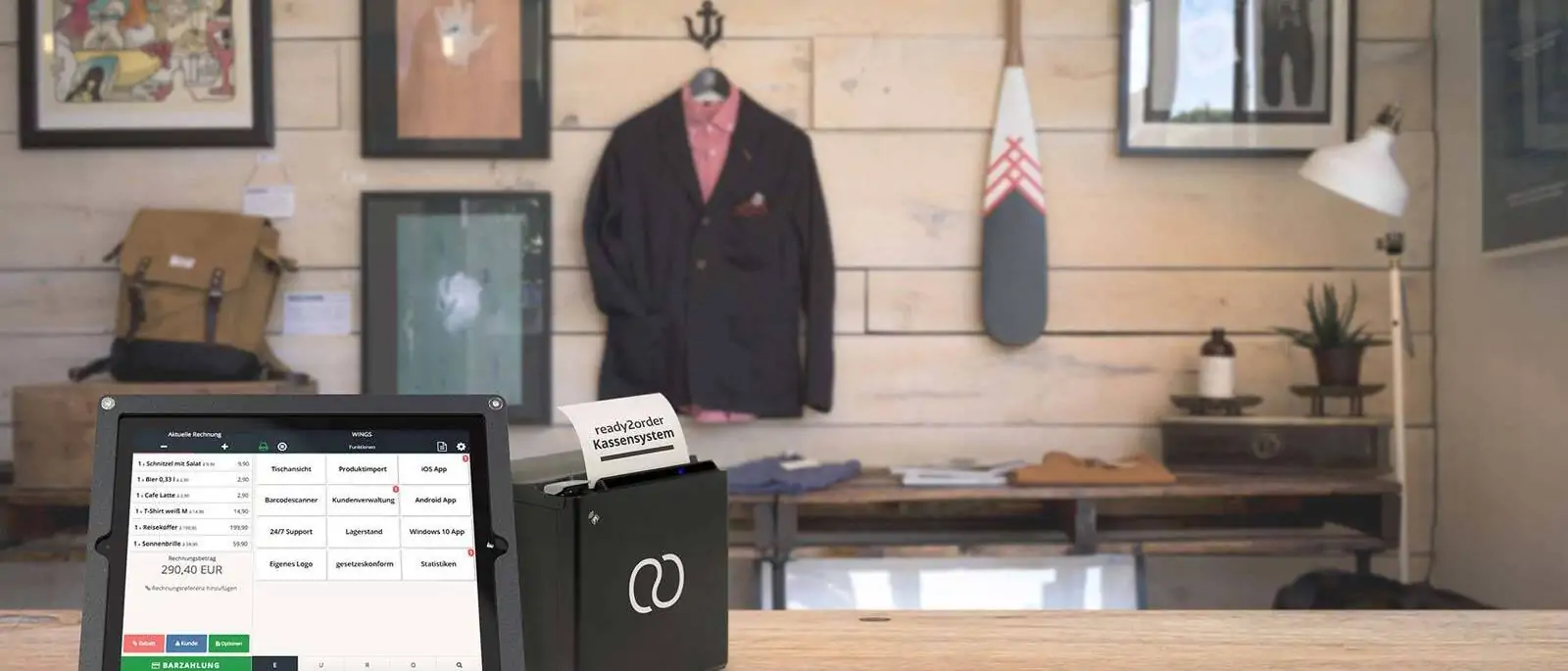
An enterprise resource planning (ERP) system is software that ensures the smooth operation of business processes within a company. It enables the tracking and optimization of inventory movements and levels, planning, sales, and purchasing—even across multiple companies. “Generally, the goal of such a computer-based system is to manage ordering, inventory holding, and sales”*.
An enterprise resource planning (ERP) system, or WaWi or WWS for short, is a software-based application system that allows different departments within a company to work independently of one another and access the system. Specifically, it manages all processes related to procurement, transportation, storage, order picking, and shipping of merchandise (merchandise management). The process steps of transportation, order picking and warehousing, however, should not be confused with the typically more complex work steps from intralogistics. A WWS is generally designed for manageable goods movements. A classic example is the traditional retailer who displays their inventory in a local store and maintains a small replenishment depot in the basement or a separate room—though multiple branches can also be networked together and share a larger warehouse. Large distribution centers, on the other hand, tend to rely on a warehouse management system and a material flow control system.
Merchandise Management System vs. ERP System: Functional Scope Is Fluid
If the scope of functions of a merchandise management system is expanded to include specialized HR modules (human resources management) or modules related to document management, it is now also referred to as an ERP system —the technical differences between the two system architectures are now blurred. It doesn’t even matter whether the system is closed, open, or integrated.
- Closed WWS: Purchasing, sales, production, and warehousing are handled exclusively within a single company by one system.
- Open system: Individual modules—at least one—are provided by other software systems.
- Integrated System: This is a “closed system” that, however, allows interfaces to banks, suppliers, e-commerce platforms, and marketplaces (such as Amazon and Zalando).
The information in an ERP system consists of traditional master data (items, suppliers, customers) and so-called transaction data (quotes, delivery notes, shipping notifications, purchase orders/orders, invoices).
Overview of retail processes and possible components
- Database maintenance (CRM) for suppliers and customers
- Posting of goods receipts – Goods Receipt
- Posting goods issued – Goods Issued
- Simple Inventory Management
- Accounting/Invoice Verification
- Billing
- Goods Movement
- Quotes (Template System)
- Shipping Processing
- Interface to the POS system (direct sales via POS)
- Human Resources, Time Tracking
- Data Exchange, for example EDIFACT / EANCOM
- Controlling
- Marketing
- Interface to the online store / E-commerce system
- Option for product notification
- Interface to a production planning and control system (PPS system)
- Order management
- Complaints
- Returns Processing (RMA)
- Inventory Management
- Archiving
Summary – Merchandise Management System
A merchandise management system covers all functions related to purchasing (ordering) and sales within a company. In addition to managing the flow of goods (warehouse and inventory management), it controls the provision of goods and makes the corresponding product, customer, and supplier data available in a structured format. It also supports users in order, quote, and invoice management, as well as inventory counting, and can generate statistics based on collected data upon request. As such, it is also an important tool for corporate marketing.
* Michael ten Hompel & Volker Heidenblut, Pocket Encyclopedia of Logistics, 3rd revised and expanded edition, page 341
Teaser image: Christoph Schachner
