


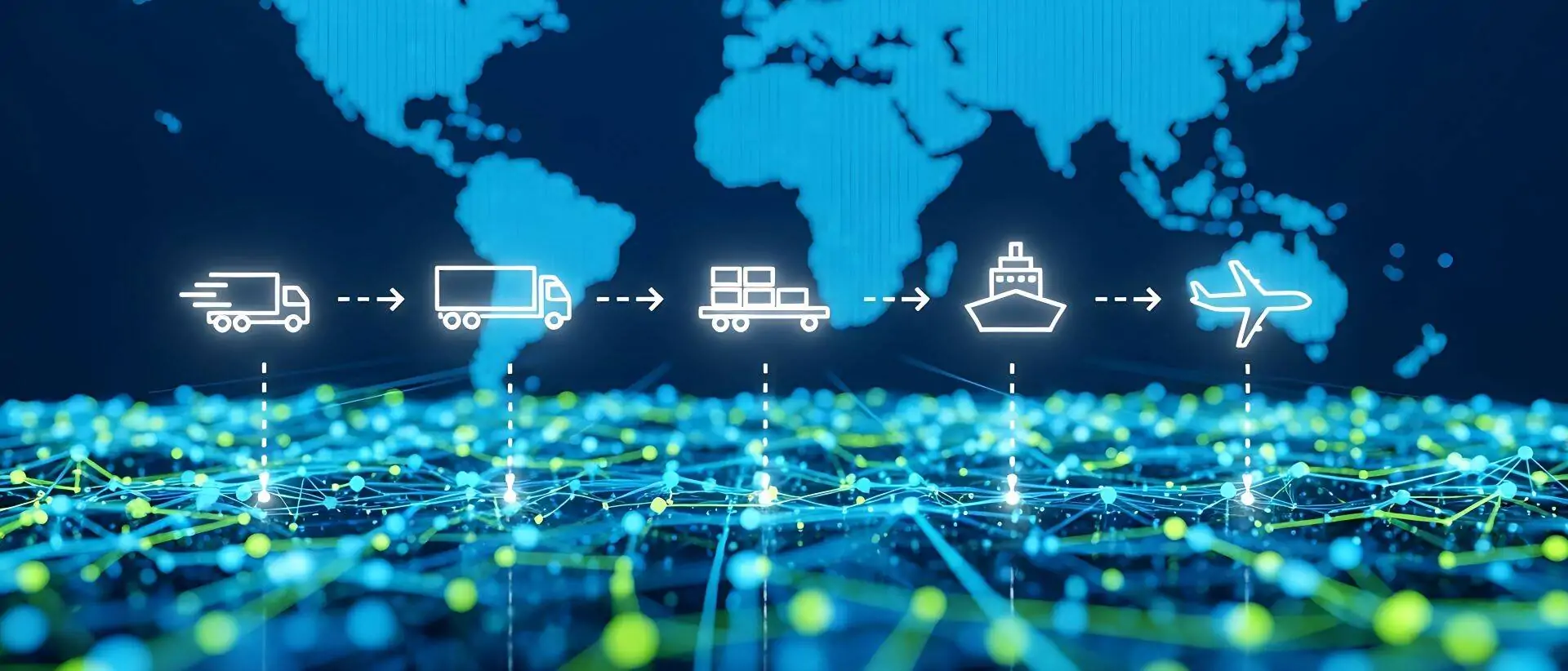
Big Data in Logistics refers to the systematic collection, processing, and analysis of large, complex, and rapidly growing volumes of data throughout logistics processes. The goal is to use data-driven insights to improve efficiency, transparency, and the quality of decision-making in transportation, warehousing, and distribution. The term is closely related to the digitization of supply chains as well as concepts such as Industry 4.0 and Smart Logistics.
Fundamentals and Definition
Big Data is often characterized by the so-called “5 V’s”:
- Volume (amount of data),
- Velocity (speed of data generation),
- Variety (data diversity),
- Veracity (data quality)
- Value (value creation).
In logistics, data is generated from a wide variety of sources, such as transport management systems, warehouse management systems, sensors, GPS devices, RFID tags, or external data sources like weather services and traffic information.
The increasing interconnectivity of logistics processes means that data is not only available on a larger scale but also in real time. This enables dynamic supply chain management that can respond to current events.
Applications in Logistics
Transportation and Route Optimization
A key area of application for big data is the optimization of transportation processes. By analyzing historical and current traffic data, routes can be planned efficiently and traffic jams avoided. Real-time data makes it possible to flexibly adjust transportation plans and shorten delivery times. Predictive analytics can also provide forecasts of future traffic conditions.
Demand Forecasting and Inventory Management
Big Data enables more accurate demand forecasts by combining sales data, seasonal trends, market analyses, and external factors. This allows companies to optimize their inventory levels, reduce excess stock, and ensure delivery capacity at the same time. This leads to better alignment between supply and demand.
Transparency in the Supply Chain
Through the use of sensors and tracking technologies, goods can be monitored throughout the entire supply chain. This increases transparency and enables seamless tracking of shipments. This plays a particularly important role in sensitive areas such as food or pharmaceutical logistics.
Risk Management
Analyzing large amounts of data makes it possible to identify potential risks early on. These include, for example, delivery delays, production outages, or geopolitical events. Companies can take proactive measures and make their supply chains more resilient.
Big Data in Intralogistics
Intralogistics—that is, the organization, control, and optimization of internal material and information flows—benefits significantly from big data.
Automation and Smart Warehouses
In modern distribution centers, data from automated systems such as conveyor systems, robots, and autonomous vehicles is continuously collected. Big Data enables the analysis of this data to optimize warehouse processes. For example, picking routes can be shortened or bottlenecks in the material flow can be identified.
By analyzing sensor data, maintenance needs for machines can be detected early on. This reduces unplanned downtime and increases equipment availability. Predictive maintenance is a central component of data-driven intralogistics systems.
Real-Time Control
Big Data enables real-time control of warehouse processes. Systems can react immediately to changes, such as sudden spikes in orders or delays in incoming goods. This significantly increases the flexibility and efficiency of intralogistics.
Technologies and Methods
The implementation of big data applications in logistics is based on a variety of technologies:
- Cloud computing enables the scalable storage and processing of large amounts of data.
- Machine learning and artificial intelligence are used to identify patterns and make predictions.
- The Internet of Things (IoT) connects physical objects and continuously provides data.
- Data mining is used to extract relevant information from large datasets.
- Blockchain technology can be used for the secure and transparent documentation of transactions in the supply chain.
These technologies form the foundation for data-driven decision-making processes and automated systems.
Advantages and Potential
The use of big data in logistics offers numerous advantages:
- Increased efficiency through optimized processes
- Cost reduction through better resource utilization
- Increased transparency in the supply chain
- Improved decision-making through data-driven analytics
- Increased customer satisfaction through more reliable deliveries
In the long term, Big Data helps make logistics systems more sustainable, for example by reducing emissions through optimized transport routes.
Challenges and Risks
Despite its wide-ranging potential, the use of Big Data also presents challenges:
Data Protection and Data Security
Processing large volumes of data raises issues of data protection and data security. Companies must ensure that sensitive information is protected and that legal requirements are met.
Data Quality
The quality of the analysis results depends heavily on the quality of the underlying data. Incomplete or erroneous data can lead to incorrect decisions.
Complexity and Integration
Integrating different data sources and systems presents a technical challenge. In addition, analyzing large volumes of data requires specialized expertise.
Investment Costs
Implementing big data technologies can involve significant costs, especially for small and medium-sized enterprises.
Future Outlook and Conclusion
The importance of big data in logistics will continue to grow in the coming years. Advances in artificial intelligence, edge computing, and 5G technology will open up new areas of application. In particular, the combination of big data with autonomous systems—such as self-driving vehicles or drones—will fundamentally transform logistics.
Intralogistics is also becoming increasingly autonomous and data-driven. Smart warehouses that optimize themselves could become the norm in the future. At the same time, the integration of sustainability considerations will play a greater role, for example through data-driven optimization of energy consumption and emissions.
Big Data is a key driver of digital transformation in logistics. Through the intelligent use of large amounts of data, processes can be made more efficient, transparent, and flexible. In intralogistics in particular, data-driven approaches are opening up new opportunities for automation and optimization. Despite existing challenges, the potential outweighs the challenges, making Big Data a key technology for the future of logistics.
