


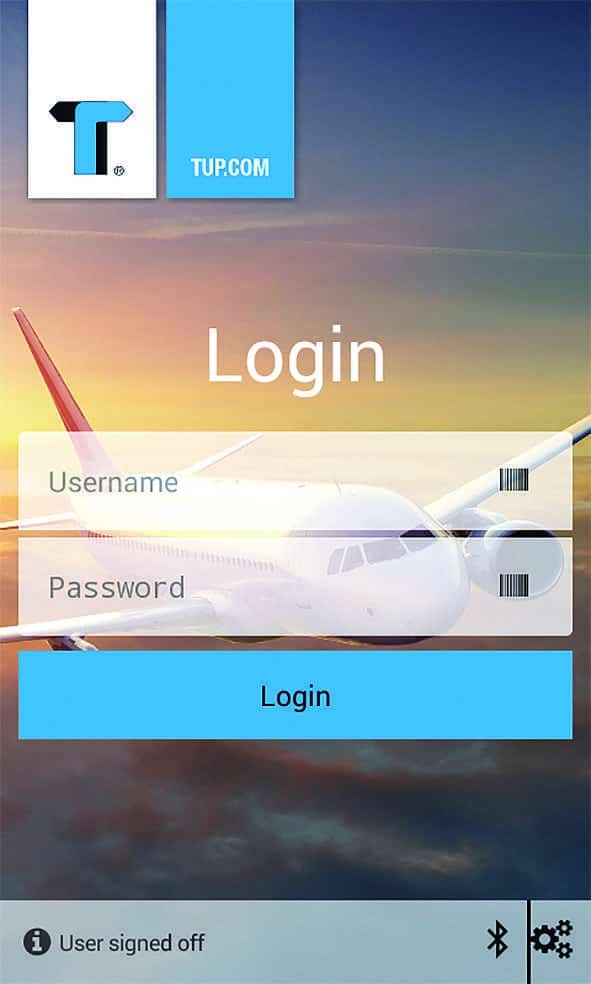
For several years now, TUP has been offering the mobile logistics system TUP.MAS for the aviation industry. This brings smartphones and handheld devices into the aviation industry’s warehouse processes. With the Mobile Aviation System, airlines and MRO (Maintenance, Repair, and Overhaul) service providers can easily optimize their aircraft maintenance and repair processes. The AMOS aircraft maintenance software from Swiss AviationSoftware (Swiss-AS) forms the basis for the mobile mapping of all processes within the TUP.MAS application and was developed in close collaboration with Swiss-AS under the product name Mobile Device System (MDS). When used together, both systems enable verifiable gains in efficiency and quality, which in turn brings cost efficiency into sharp focus—a success story in a nutshell.
Co-author: Kevin Hohmann
Airplanes are still considered the safest of all modes of transportation. However, to ensure flight safety at all times, aircraft must undergo regular and thorough maintenance. Aircraft maintenance is a highly responsible task, as only aircraft maintained in accordance with regulations are permitted to take off. This presents a logistical challenge, as maintenance work must be coordinated with flight schedules and other external factors. For cost reasons, operators aim to allocate as little time as possible to this process, since aircraft are only profitable when they are in the air. This results in a high demand for available spare parts. This is one of many reasons why maintenance at this level of service requires a spare parts inventory with uninterrupted availability and the highest process quality.
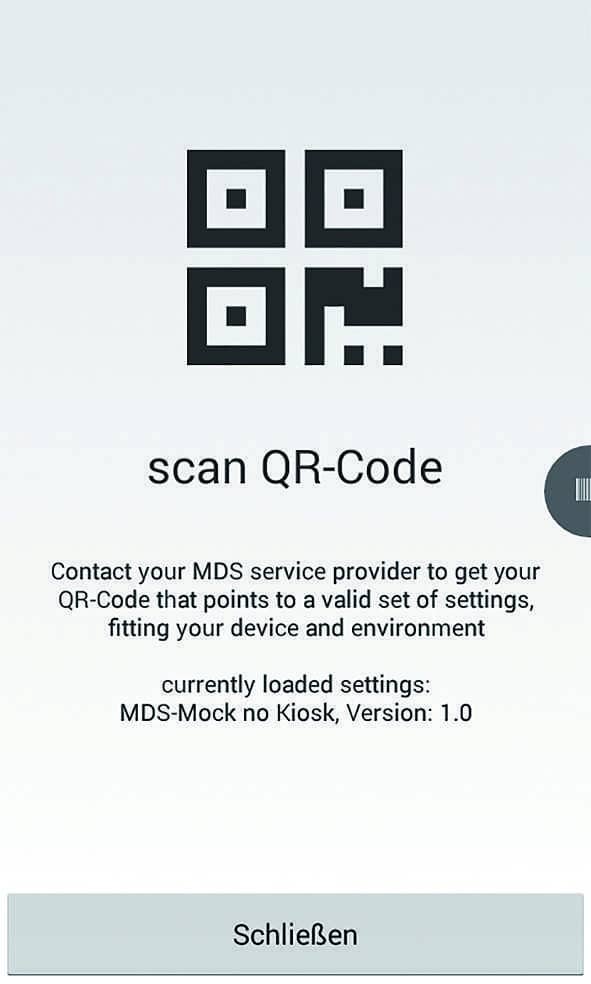
Swiss-AS’s AMOS has been supporting airlines and MRO service providers worldwide in these areas for around 30 years. Over 170 international customers in the aviation industry use the system developed by the Swiss International Air Lines subsidiary. With its wide range of functions, it offers an end-to-end solution for all maintenance processes. To improve workflows, inventory quality, and transparency in spare parts warehouses, data and information on error-free storage, provisioning, and picking play a central role. Based on these requirements, TUP developed the Mobile Aviation System TUP.MAS in collaboration with Swiss-AS.
“The Mobile Aviation System is a module designed to support warehouse processes at airports using mobile Android handhelds, MDEs, or Android smartphones (conventional smartphones). We have established an integration with AMOS to map warehouse processes on mobile devices and thus support employees in their daily work. We are, so to speak, the extended, mobile arm of the AMOS warehouse process,” explains Dipl.-Ing. Günther Pfisterer, TUP.MAS project manager and member of the executive board at TUP.
TUP.MAS: Real-Time Transactions
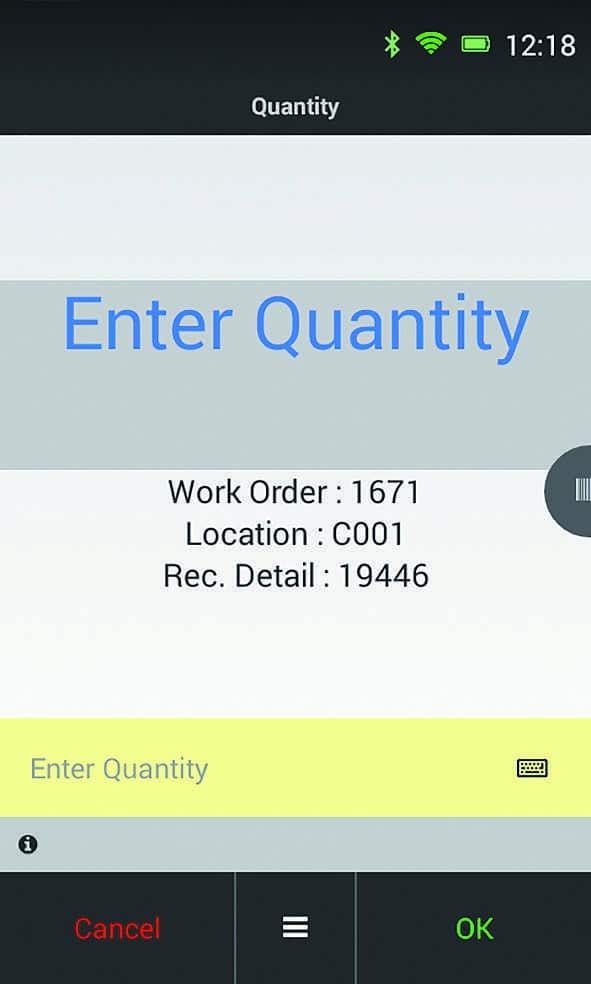
Before the TUP software was integrated into AMOS, putaway operations took place exclusively at stationary PC terminals. In practice, this worked as follows: The employee would go to the storage bin (fixed-location principle) with a spare part and then had to return to the terminal. There, they would enter the storage bin where they had placed the spare part. Only then could the inventory posting be completed, and the item was recorded in the system. When developing its module, TUP took a close look at these processes, focusing on the needs of the employees. “We always develop our solutions from the bottom up and engage intensively with our customers’ challenges. We also involve the employees in this process. This is how TUP.MAS ultimately emerged as a mobile solution that has proven itself in practice,” Pfisterer explains the development process. The time-consuming and sometimes error-prone processes were eliminated through the use of TUP.MAS and mobile devices. Employees can now record transactions online on-site, directly at the storage location. This results in significant time savings and improves the quality of the entries.
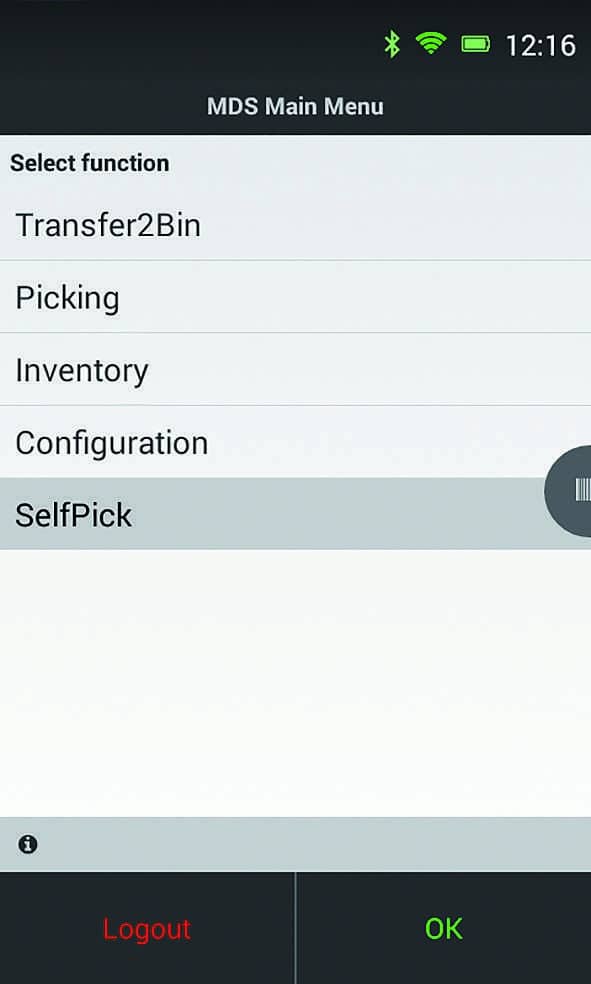
“All bookings are recorded in real time and transferred directly from TUP.MAS to the AMOS system online—even the simplest put-away operations are thus captured. Consequently, there is always an accurate representation of a spare part’s physical movement in the system,” Pfisterer continues. The advantage over processing without mobile devices is obvious: “Warehouse staff communicate directly with the host system via mobile devices. The devices also offer intuitive user guidance, industrial-grade barcode technology for data capture during putaway, as well as during order picking and order confirmation, precise instructions for all work steps, and route-optimized, time-saving picking routes. Added to this are features such as automatic reporting of stock shortages, the addition of new items, and inventory functions,” Pfisterer explains the possible applications.
Competitiveness Through Transparency
In times when airlines are facing increasing cost pressures due to intense market competition, optimizing processes for aircraft fleet maintenance can become a competitive advantage, as inventory in the aviation industry is extremely valuable. A single spare part can easily cost several hundred thousand euros. Regulations regarding flight safety also play a role here. Companies in the industry are required to document where each spare part has been installed. On the one hand, this is for liability reasons; on the other hand, in the event of a manufacturer’s recall of a specific part, they must know exactly which aircraft it has already been installed in so they can replace it immediately. Consequently, the traceability of batches—from goods receipt through the entire hangar process, including every storage location, all the way to installation in the aircraft—is a top priority. “Precise batch tracking is essential for maintaining the high quality standards in the spare-part-intensive aviation industry. TUP.MAS provides immense support to the AMOS system in this regard, as it eliminates manual data entry errors and ensures 100% data accuracy,” summarizes Project Manager Günther Pfisterer.
As the quality of entries improves during both putaway and picking, inventory discrepancies decrease. The effort required for inventory counting is thus significantly reduced, in part because the count can be performed directly at the storage bin. The system prompts the responsible employee to count a bin; the employee scans the bin and every single part inside it, simultaneously recording the quantity online. “It’s always 100 percent clear where a specific part is located. In many cases, auditors have therefore already agreed that during inventory counts, it’s not necessary to count everything every time, but only to conduct spot checks,” says Pfisterer, explaining the verifiable improvement in quality.
But the Mobile Aviation System can be used for more than just scheduled maintenance or inventory counts. A solution has also been developed for unscheduled aircraft maintenance, which occurs time and again. “We’ve implemented corresponding procedures for ‘Aircraft On Ground’ (AOG) maintenance. In this case, the relevant spare parts are treated with the highest priority by TUP.MAS. Consequently, when a rush order is entered and an aircraft lands for AOG maintenance, the prioritized spare parts are dispensed first and highlighted accordingly by our system. The employee is automatically directed to these urgently needed items,” says Pfisterer. The software also takes into account inventory-related replenishment rules, such as “First In, First Out,” remaining shelf life, and best-before dates. “In the past, the warehouse clerk decided which part to pick, install, and later record. TUP.MAS now tells him exactly which component to use. This ensures that spare parts do not remain in the warehouse longer than necessary. This benefits quality and reduces scrap due to overstocking,” Pfisterer continues.
For warehouse operations, specially designed industrial-grade mobile data collection devices (MDE or handhelds without a keyboard or touchscreen) with an integrated scanner and the Android operating system are suitable. These are frequently used because they offer good scan quality. “But theoretically, conventional Android smartphones can also be used. Both smartphones with built-in cameras and those with external scanners—such as a ring scanner—can be used for warehouse work. Here, the customer has a free choice. The specific device is initially of secondary importance for using the software. The customer receives a ready-to-use operating system and hardware tailored to it and simply needs to install the TUP.MAS app,” says Pfisterer.
TUP.MAS—Looking Toward the Future
Despite the fact that implementation is already straightforward today and despite all the other advantages the Mobile Aviation System offers its users, TUP and Swiss-AS are working together to further develop the module. “We want to continuously expand the functions of TUP.MAS. One example of this is the management and return of tools to the warehouse. Just as in a surgical operating room, it must also be ensured in the hangar that all tools used during maintenance are removed from the aircraft afterward. We are currently working closely with our customers and Swiss-AS to implement this feature,” explains Pfisterer. The traceability of the spare parts themselves is also set to be further improved. “We’ve heard from the industry that the parts that have been removed must continue to be tracked all the way to the workshop—similar to package tracking by express delivery service providers. The customer wants to know where the spare parts are located before they are installed. This means that, for traceability reasons, the logistics chain between the warehouse and the installation site is increasingly being closed. This is also due to the fact that MRO service providers must account to their clients for the current location of the parts so that they can reallocate them if necessary.”
