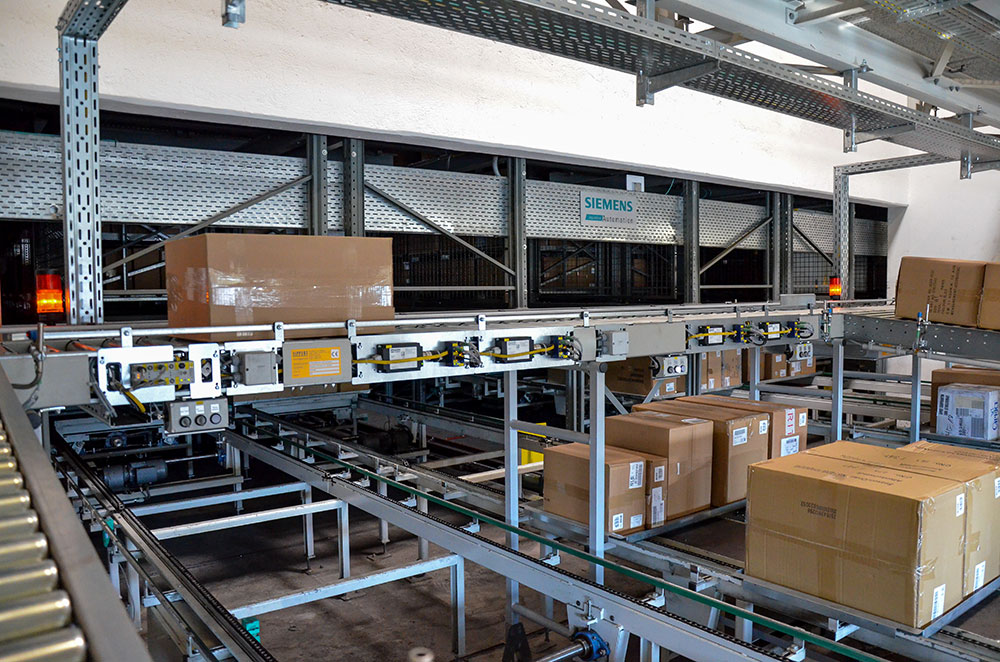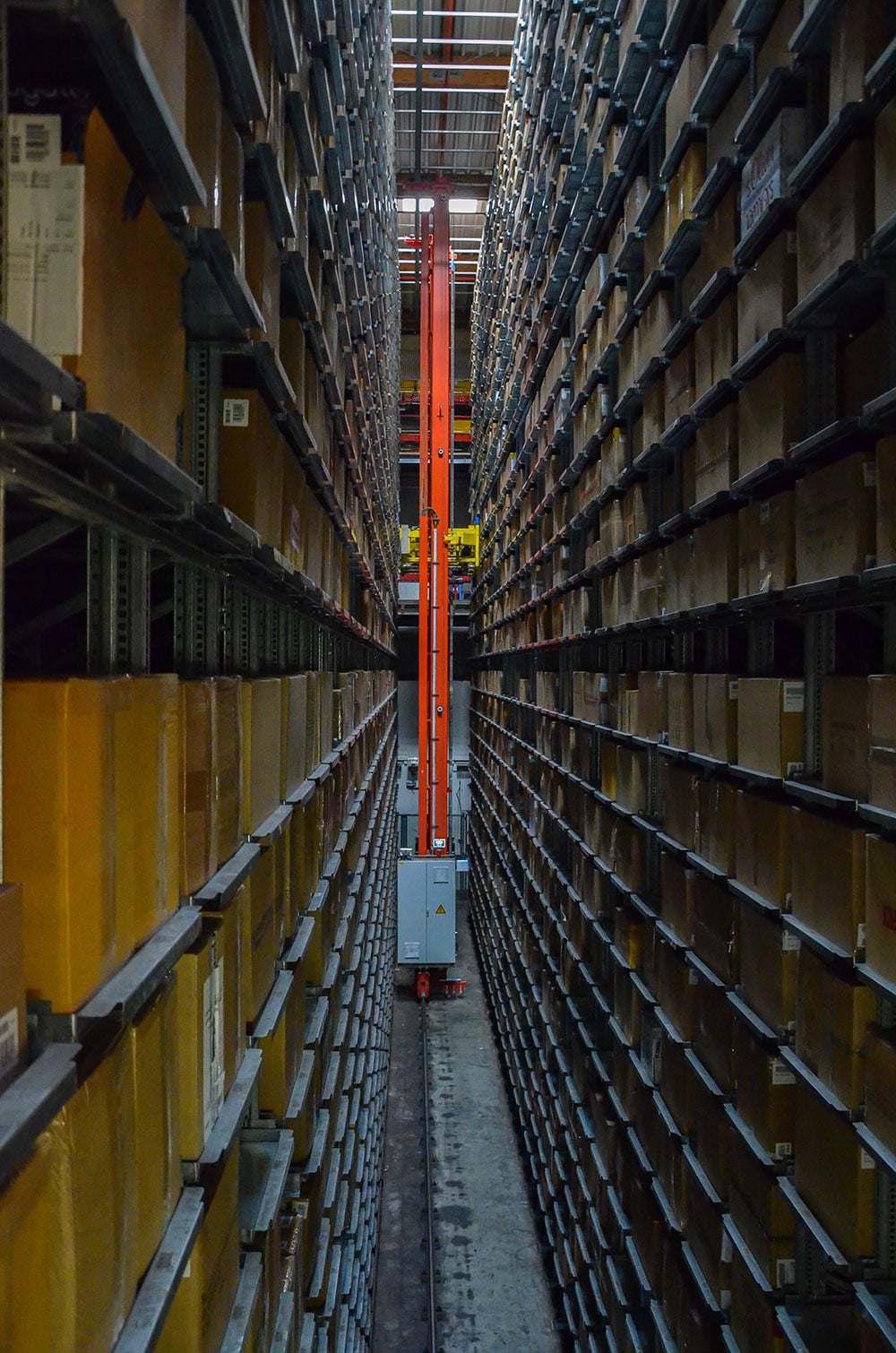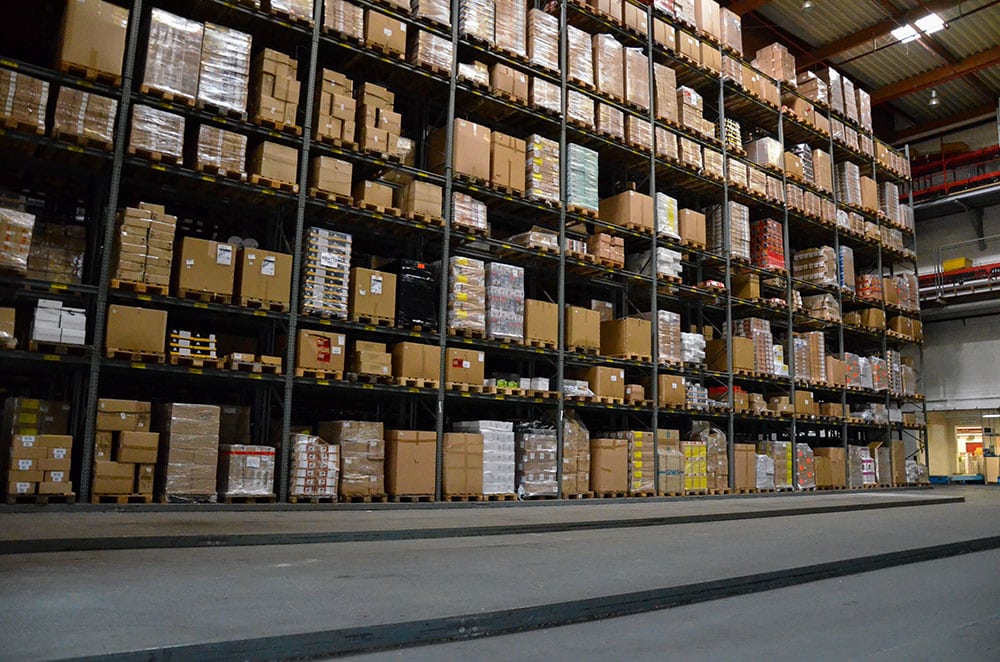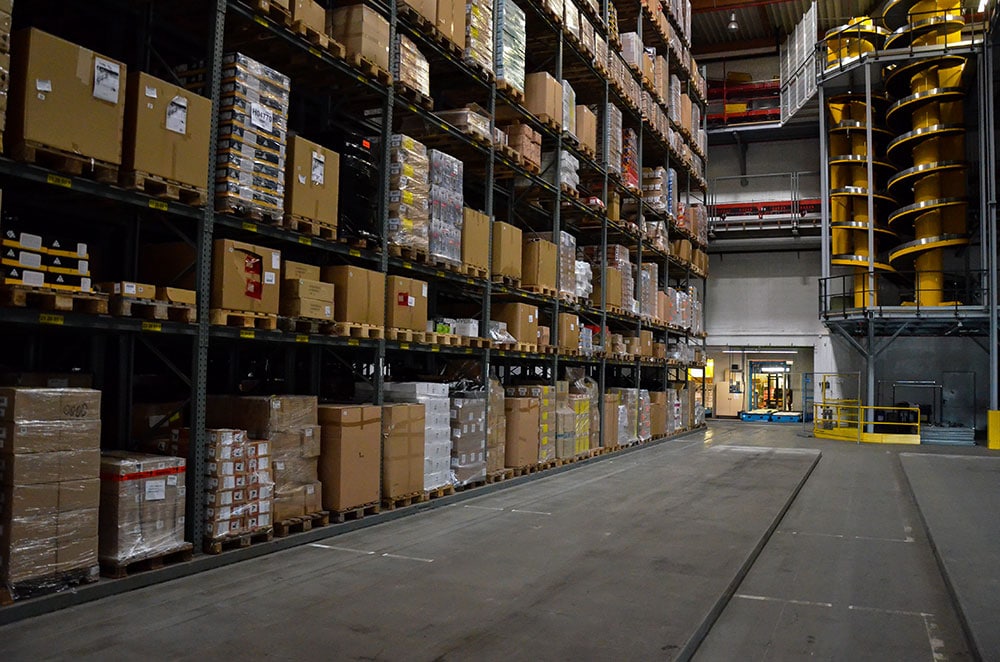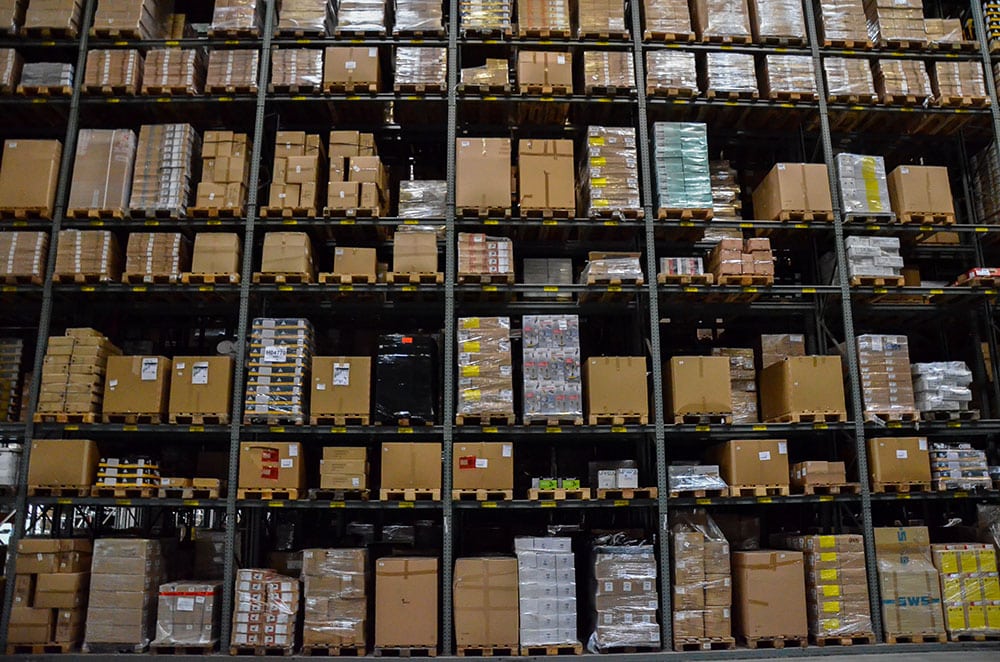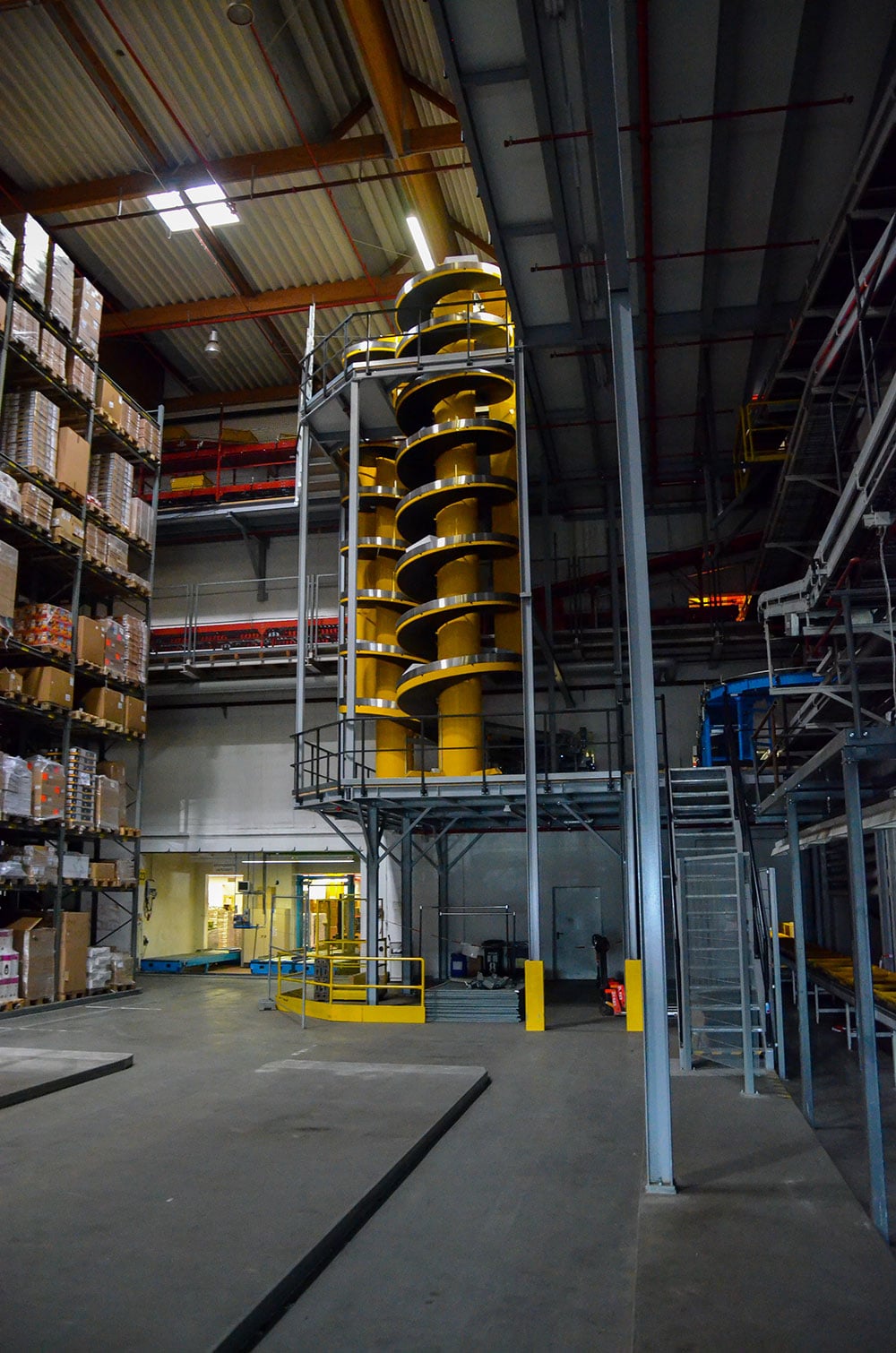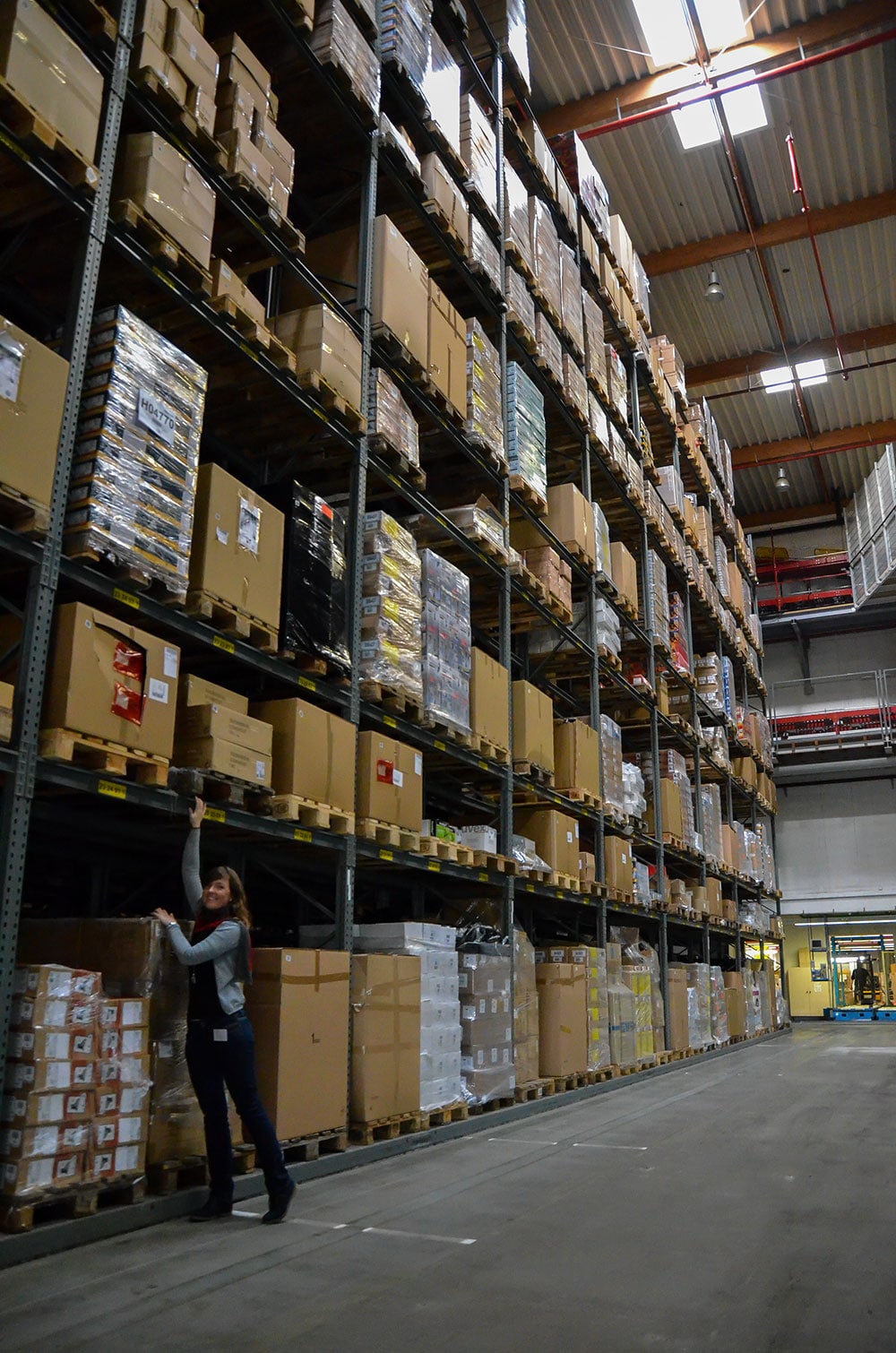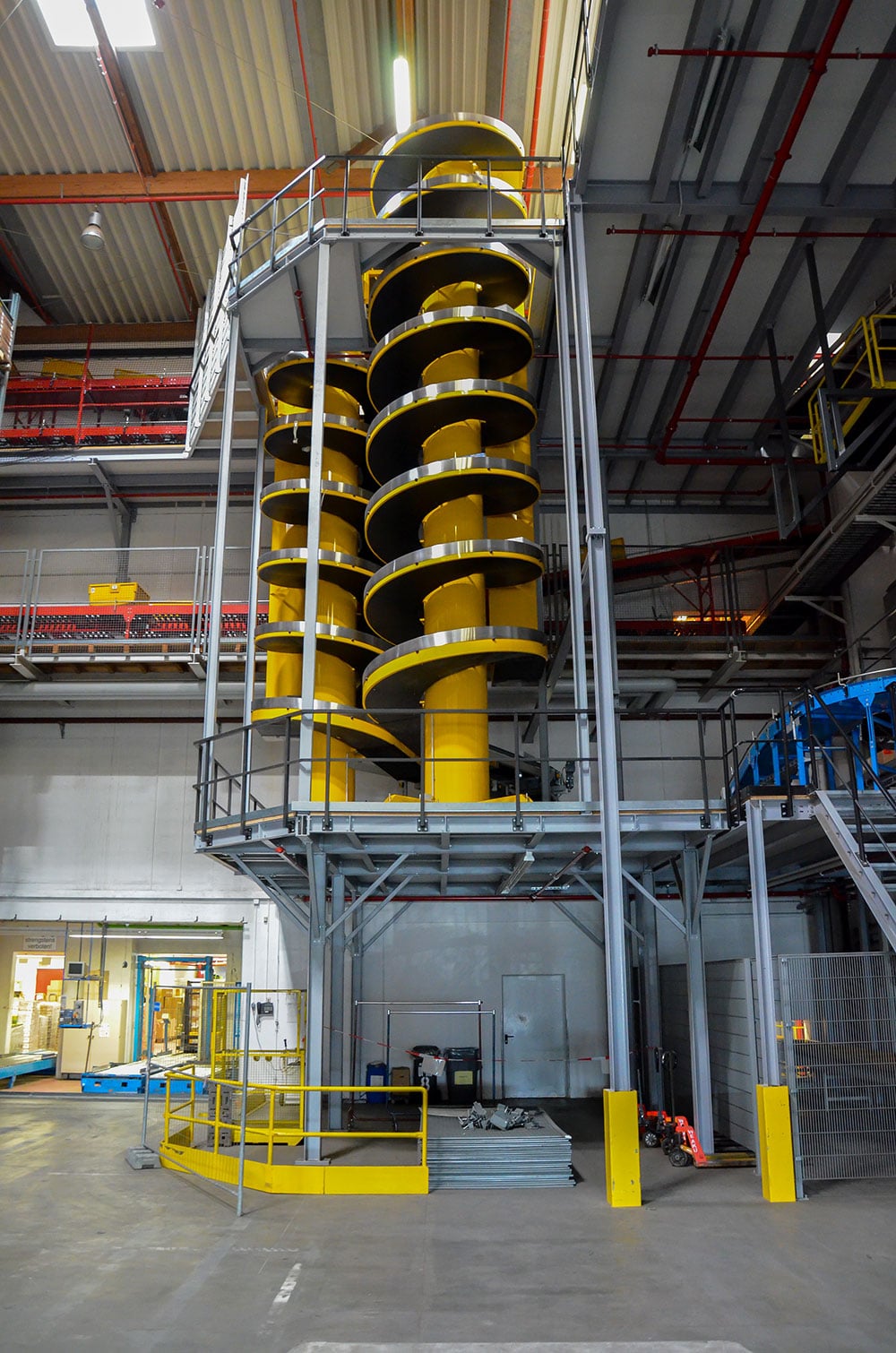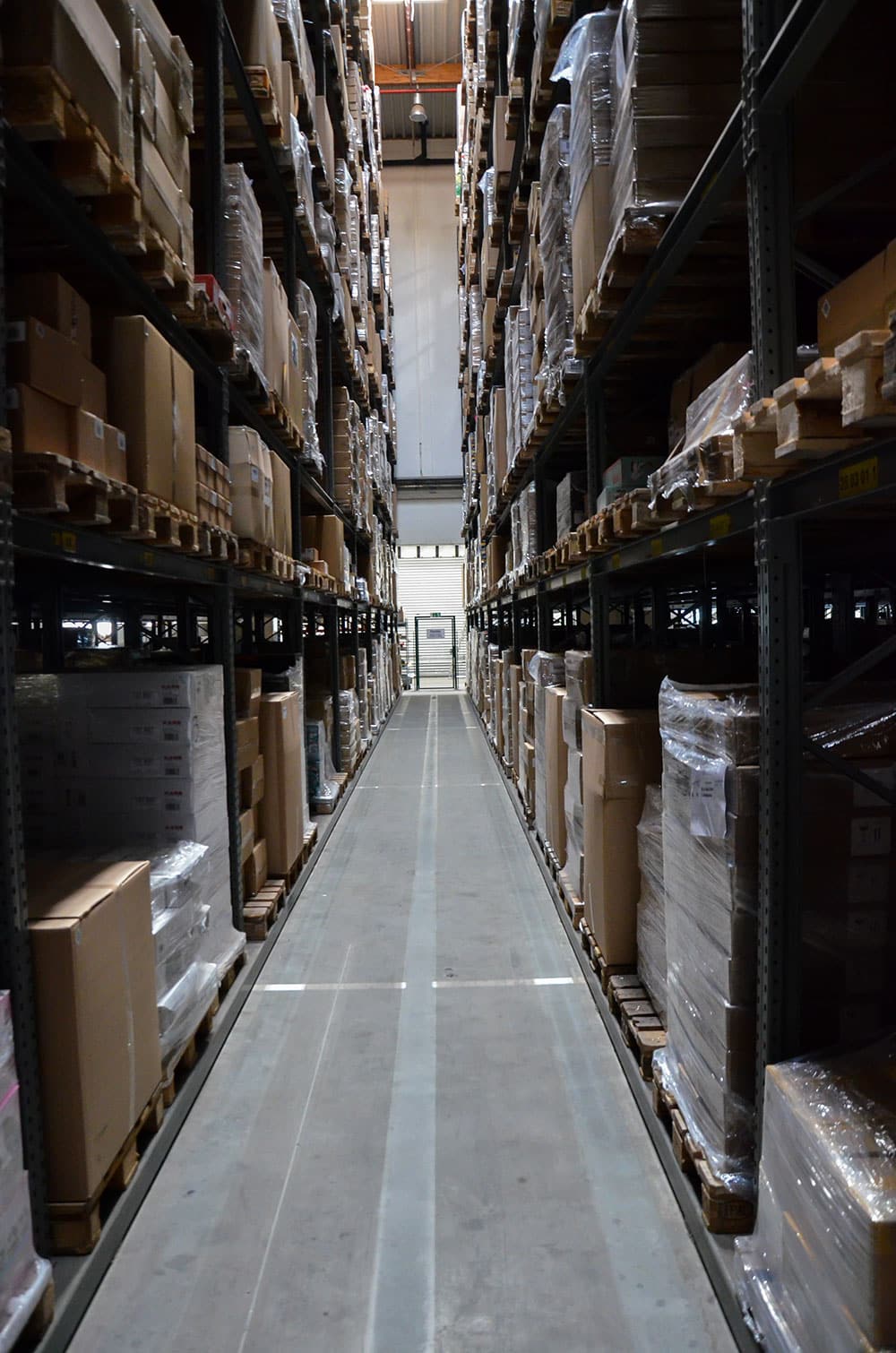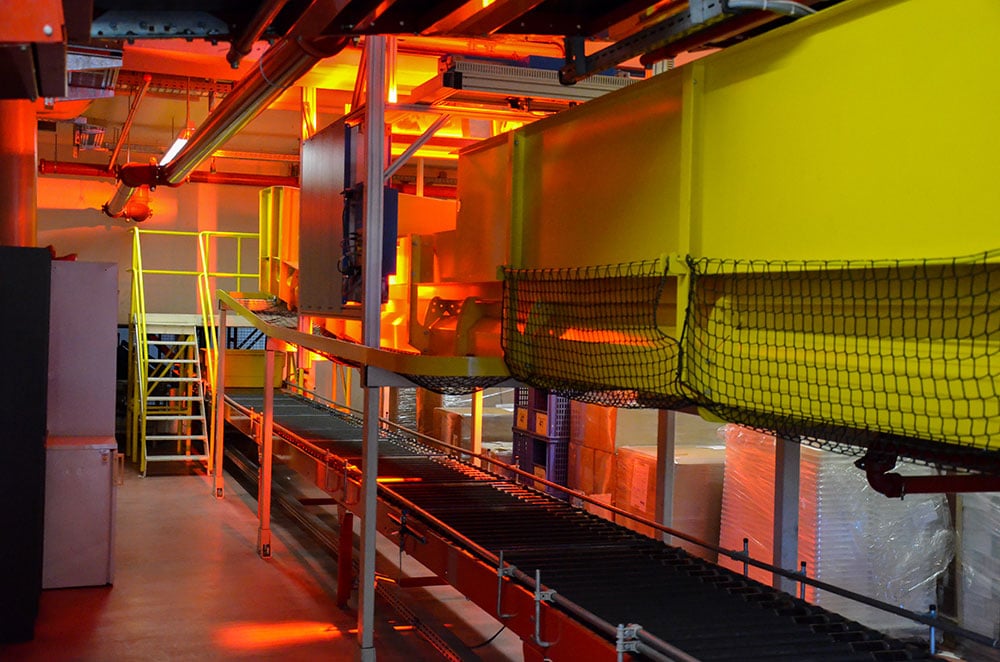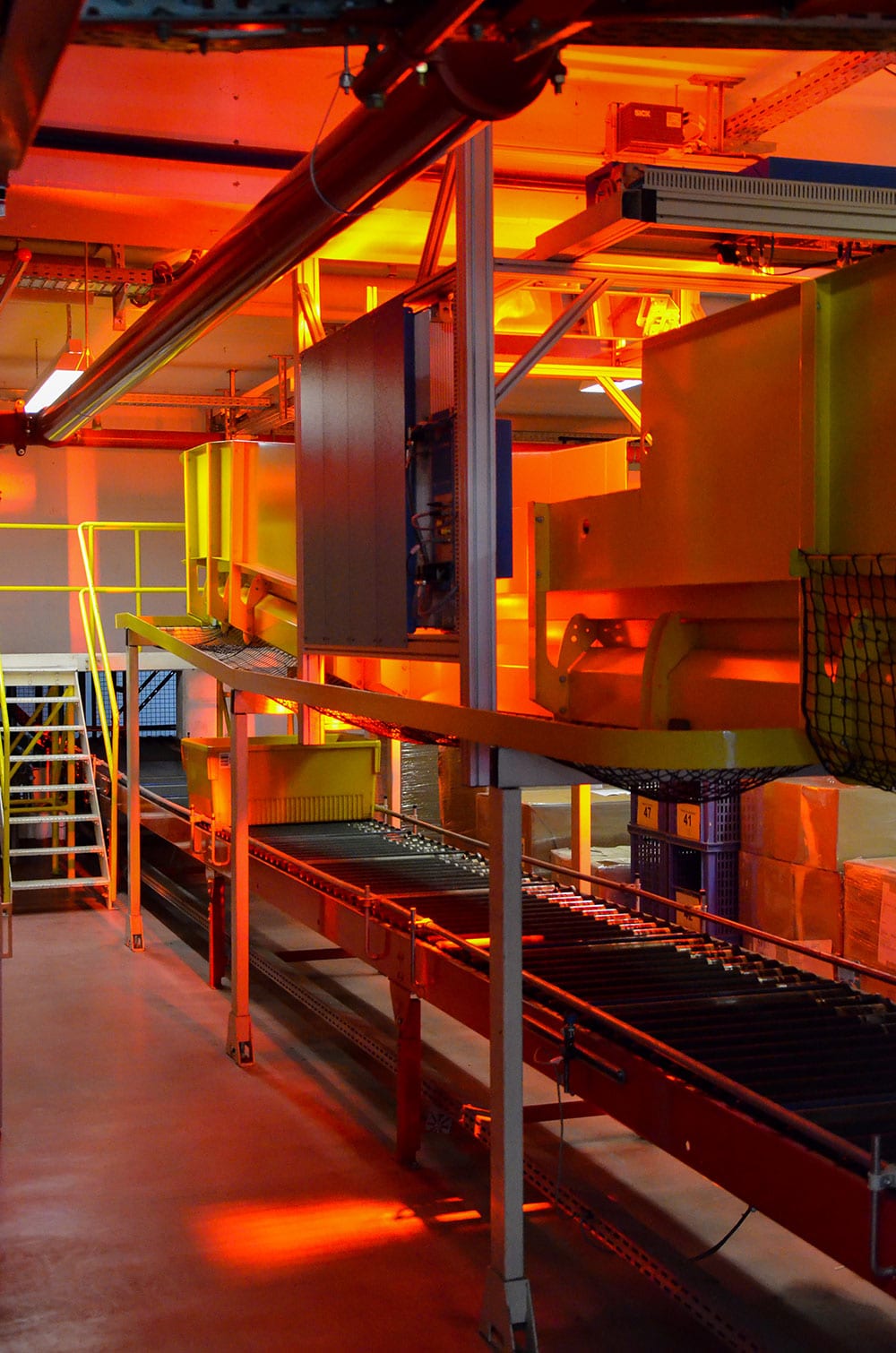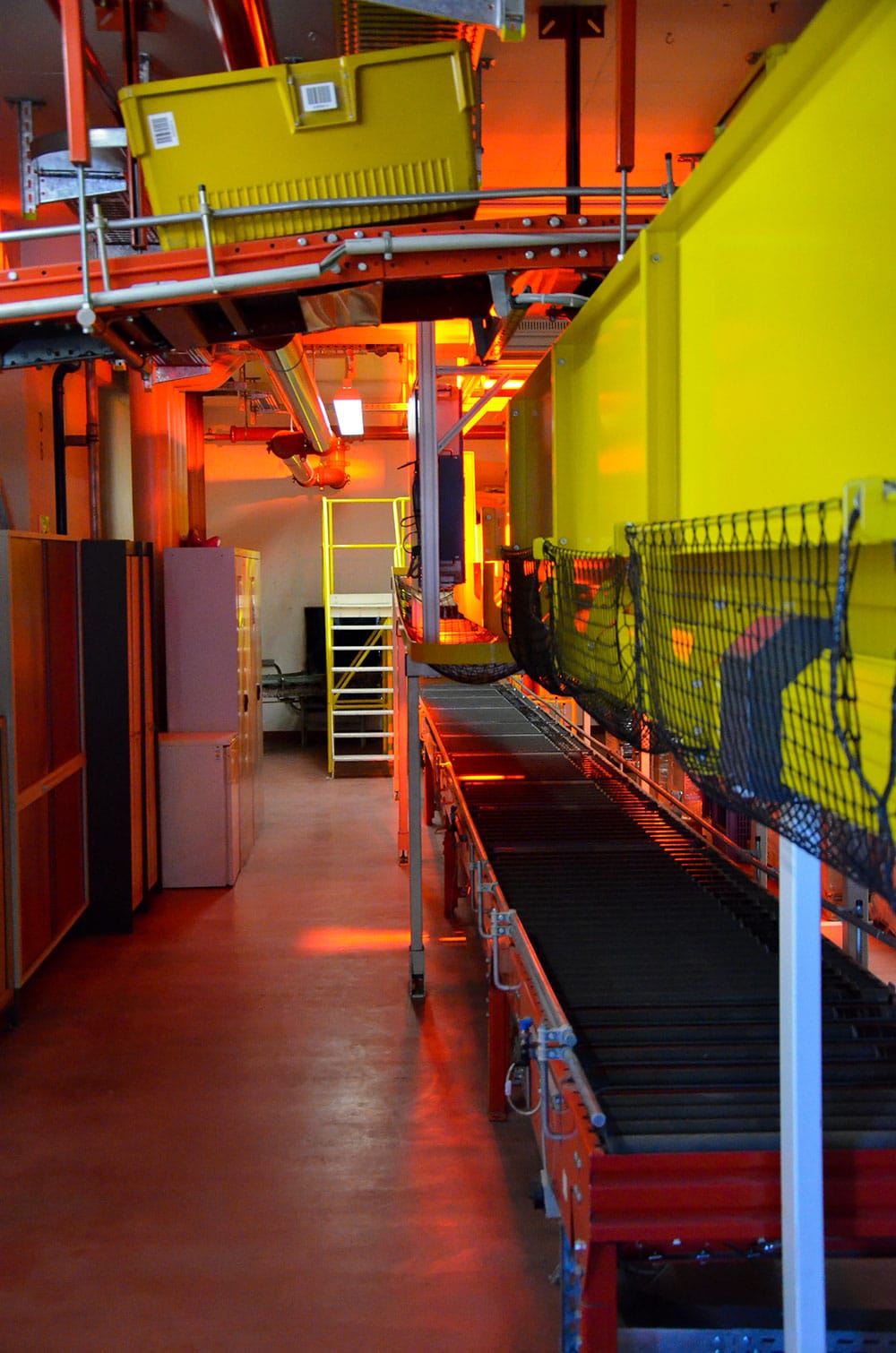
Recently, our editorial team had the opportunity to take a look behind the scenes at BAUR’s distribution center and marvel at countless kilometers of conveyor systems. After what felt like a marathon tour through the hallowed halls, Jürgen Lehmann, Head of Logistics at BAUR and a veteran of the intralogistics industry, took the time for a TUP interview. He answered questions ranging from the long-standing partnership with TUP to the concept of “same-day delivery” and the positive results of automation. At the end of the interview, we’ve also included a small photo gallery.
Interview with Jürgen Lehmann, Head of Logistics at BAUR
As is well known, BAUR is more than just a logistics center or a shoe mail-order company founded in 1925. Could you briefly tell me about the size of the company and its main daily operations? For example, which mail-order customers do you serve? How many employees does the group have in total?
BAUR is one of the largest mail-order companies in Germany. The entire BAUR Group employs approximately 4,500 people, 3,900 of whom work at the Altenkunstadt site in Upper Franconia alone. This is a strategically important location that was even the center of the German shoe industry from 1888 to 1990—in other words, it has a long tradition.
In addition to BAUR itself, we also serve brands such as SportScheck, the Otto Group (e.g., Heine, Bonprix, Otto), S.Oliver, hagebau, and Schwab in both mail-order and brick-and-mortar retail. For good reasons, these services are typically handled through our subsidiaries BFS Baur Fulfillment Solutions GmbH and Hermes. This is because our customer service, merchandise handling, and payment management have repeatedly been rated “excellent” for years in the areas of service management and customer orientation. In addition, Hermes is currently Germany’s largest postal-independent logistics service provider, with annual revenue of nearly two billion euros.
TUP and BAUR have been closely linked for 30 years. It’s a successful partnership that will certainly continue in the future. What do you value most about this long-term partnership with TUP? What makes this business relationship special?
Unfortunately, I can’t speak to the full 30 years. I’ve only been with BAUR for 22 years (smiles). Of course, I’ve been able to witness a large part of this partnership firsthand. When I first started, we were handling about 20 million parts a year; now we’re at 62 million parts. Especially in the last ten to twelve years, since the Otto Group acquired a stake in BAUR, our focus has been entirely on growth. From a technical standpoint, we’ve been fortunate to have found a reliable partner in TUP. When you’re involved in automation—in our case, helping to design warehouse management systems—you’re embarking on a kind of marathon in the long term. And in a professional setting, a runner doesn’t constantly change their shoes; rather, they adapt them to the circumstances over the years. That’s exactly what we’re celebrating with the Karlsruhe-based company. A logistics company must decide whether to rely on a stable system that can be fine-tuned on an individual basis time and again, or to integrate a completely new system. The latter, however, also means that countless millions of euros would have to be invested—which is truly a risk.
For us, therefore, it’s more important to be able to operate efficiently with the systems we’ve developed together. A system like this, developed with a 30-year horizon, has not only grown over the years; it’s also stable and less susceptible to disruptions from any direction. Fundamentally, the respective philosophies of the companies must align, and the interpersonal dynamics must be right. The business partner must recognize my concerns and ultimately play an active role in the processes. If that doesn’t work, future-oriented development cannot bear fruit. The overall package must be right. We’ve tackled projects together, and the most important aspect of these is that the intralogistics in use—whether hardware or software—works. Of course, there are also stressful moments or disagreements. But as long as everyone involved is eager to tackle these complex projects and take on the challenges, I see no reason to end this collaboration.
Could you possibly provide me with information on the total number of meters of conveyor systems used by BAUR to move items?
At this location, approximately 26 kilometers of conveyor systems are in operation. Two pack sorters, one sorting sorter (more about sorters in intralogistics); via which we direct the items to the goods issue area. Across multiple floors and buildings, thousands of items are routed from A to B, processed, and inspected every day—without ever having to halt the process. Every now and then, you might feel a bit dizzy at certain points. The structural changes made to benefit our environment illustrate the scale of our operations. After all, we’re not located in a purely industrial area here, but in a mixed-use zone. In addition, working hours have also changed in recent years. Twenty years ago, BAUR’s workday ran from 7 a.m. to 4 p.m. In many areas of logistics, work now continues around the clock—at the Altenkunstadt site, employees work from 5 a.m. to 1 a.m. That’s why we decided to erect a massive noise barrier to ensure that residents aren’t disturbed by ongoing operations. The Hermes area, from which the trucks depart, is even completely covered, meaning it’s isolated from the outside world.
When it comes to logistics, I’m personally interested in technological progress. Where do you see BAUR in 10 and 20 years?
In recent months, the term “Same Day Delivery
.” Undoubtedly, same-day delivery will continue to be prioritized in the future. However, this ordering process isn’t truly feasible from either an economic or a social perspective. For BAUR, for example, same-day distribution of goods throughout Germany would require five new locations—in other words, our costs would skyrocket, and low wages would be the result. The future will involve delivering goods to the customer within a reasonable timeframe. We’re talking about nothing more than a 24-hour window. In my opinion, this is a timeframe that is absolutely sufficient for every customer. Crucially, our promise to deliver the goods within 24 hours must be kept 100 percent of the time. Furthermore, in the future, customers will be notified of the exact time their shipment will arrive. For example, “Your shipment will be delivered between 10 a.m. and 12 p.m.” The courier will thus be given a precise route, and the customer will be able to track the delivery in real time.
Currently, we’re already able to process nearly 70 percent of orders on the same day and hand them over to the appropriate carrier. The remaining 30 percent reach the customer within 48 hours. With 63 million parts leaving our shipping department each year, that’s an enormous achievement. Environmental considerations will continue to be integrated into our individual processes in the future. For years, we have been working to steadily reduce CO2 emissions. At BAUR, all machines in the individual sections are now operated only when they are actually needed. Thanks to appropriate sensors, the conveyor system is informed whether there are still parts on the system that need to be moved. In addition, outdated mechanical components are being replaced with new ones. This saves a tremendous amount of energy and, of course, reduces costs. By 2020, we aim to have reduced CO2 emissions by 50 percent. It’s a fair goal for the environment, and I’m confident we’ll achieve it.
Let’s take a look back. What was the key workflow that significantly transformed logistics?
I’m a numbers person. Based on these figures, you can at least see a trend toward simplification. Fifteen years ago, we were able to process 20 million parts; now, that number has already surpassed 60 million. The number of employees is particularly interesting in this context: Back then, we had 1,600 employees; today, we have just under 1,200—even though we have to handle more than three times the volume of goods. Through smart automation, we’ve managed to reduce the workload on our employees and produce more with fewer staff. However, the number of employees also shows that mass layoffs are not an issue for us, even in the age of modern technology. The region is, so to speak, the backbone of the company.