


The success of e-commerce has led to a lot of air being packed into packages and transported by truck. To avoid this, the joint research project between TUP, AMAI, and Bosch Automotive Aftermarket is relying on AI.
Inefficient packing in the packing department incurs costs and harms the environment
The problem is not new: Goods ordered online are often packed in oversized packages that do not always reach the end customer via the most efficiently utilized modes of transport. The need for speed in e-commerce, combined with material waste, leads to too much “air” in the process at every stage. The success of online retail further intensifies the pressure to take action.

“Package optimization, or case calculation, is a core logistics problem. However, it is complex to calculate because the solution must satisfy a large number of constraints.”
– Eduard Wagner, TUP-CIO
The goal is to find a cost-effective solution to the “multi-level 3-dimensional multi-bin-size bin packaging problem”
Ultimately, the task involves—in a coordinated manner—distributing the items in an order among packaging units, determining the packing sequence of the individual items within each packaging unit, and assigning these packing stations and delivery pallets within the warehouse. Added to this is the selection of the best possible delivery vehicle. Against this backdrop, many approaches are limited to optimization within the sub-aspects of order picking, packaging, and transport. The research project “The Perfect Package,” however, set out to address as many of these sub-problems as possible simultaneously and in conjunction with one another: At the initiative of TUP, between January 2021 and January 2022, the Institute for Conveyor Technology and Logistics Systems (IFL) at the Karlsruhe Institute of Technology (KIT), the software company Amai—which specializes in AI applications—and Bosch Automotive Aftermarket thus tackled the “Multi-Level 3-Dimensional Multi-Bin-Size Bin Packaging Problem.” In doing so, they relied primarily on artificial intelligence methods. While KIT was primarily responsible for basic research in the project, Amai contributed expertise in the development of AI algorithms—and TUP brought process knowledge from intralogistics to the table. Bosch Automotive Aftermarket acted as the client and allowed the consortium partners to test the model under real-world conditions at the Karlsruhe site.
Over the course of the project, purely mathematical and metaheuristic algorithms were compared with artificial intelligence methods through simulations. It quickly became apparent that mathematical models were reaching their limits in terms of computational power, while so-called reinforcement learning held potential for shortening computational paths. “Actually, you need the results in real time,” explains Wagner. With reinforcement learning, an artificial intelligence is taught how to pack a package. “Through repetitive learning, a system actually learns how to act most effectively in accordance with target metrics and constraints.” Target metrics might include packing as few packages of a given size as possible while leaving as little empty space as possible. Constraints relate, for example, to maximum weights or specified edge lengths.

“It’s impossible to calculate the optimal solution in every respect. That would take years. The trick lies in breaking down the problem mathematically and precisely defining the processes in intralogistics. Setting up the target system at the outset was therefore one of the toughest challenges of the project.”
– Daniel Hille, TUP Project Manager
The next steps included extracting training data from a simulation, creating a reinforcement learning model, developing a suitable intuitive graphical user interface (GUI), integrating everything into a complete system, and finally conducting an evaluation on the demonstrator.
The project was funded as part of the Baden-Württemberg AI Innovation Competition organized by the state’s Ministry of Economic Affairs, Labor, and Housing. The competition aims to foster collaborative research projects between academia and industry to accelerate the transfer of AI technologies and knowledge to small and medium-sized enterprises.

“Baden-Württemberg AI Innovation Competition” as an Opportunity for Collaboration and a Competitive Advantage
“As an SME, we have projects, we have specific customers, and we really don’t have time,” says Wagner. Consequently, there has always been a certain reluctance toward scientific initiatives that go beyond the company’s own research and development. “On the other hand, this is, of course, a question of funding opportunities.” The ministry’s financial support has now made it possible to establish a four-person core research team within the SME.
“Overall, however, at least 20 people or more at TUP were involved with the project at some point,” says project manager Hille, who is particularly pleased with one “byproduct”: During the project’s most productive year, the consortium partners supervised five thesis projects on various aspects of the multi-level 3-dimensional multi-bin-size bin packaging problem. “A research project opens up many horizons and points of connection to other fields, but these cannot be fully explored within such a short time frame,” explains Hille. “Theses are a good opportunity to delve deeper into specific areas—and to receive practical support in the process.” At TUP, for example, a master’s thesis was written on the topic “Graphical User Interface (GUI) in the Packing, Consolidation, and Loading Process at the Distribution Center.”
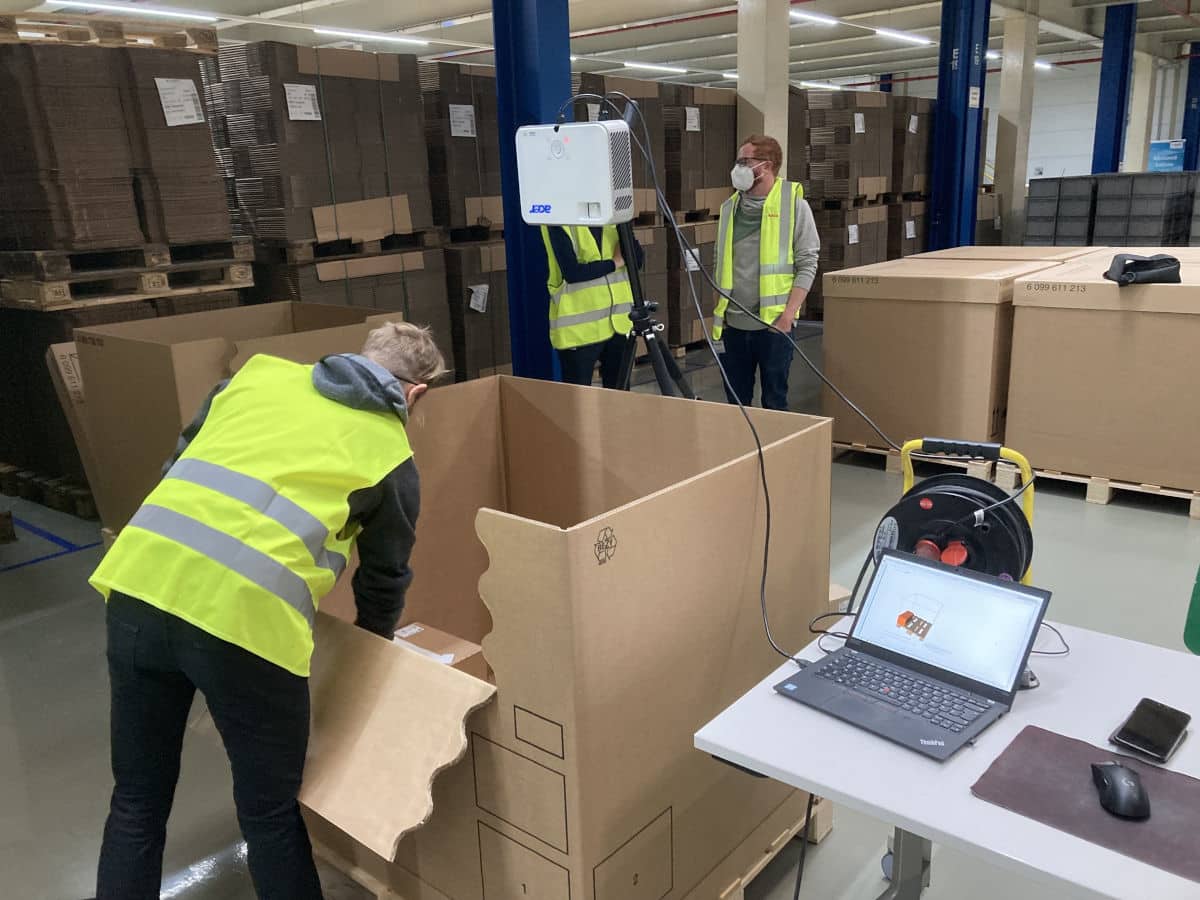
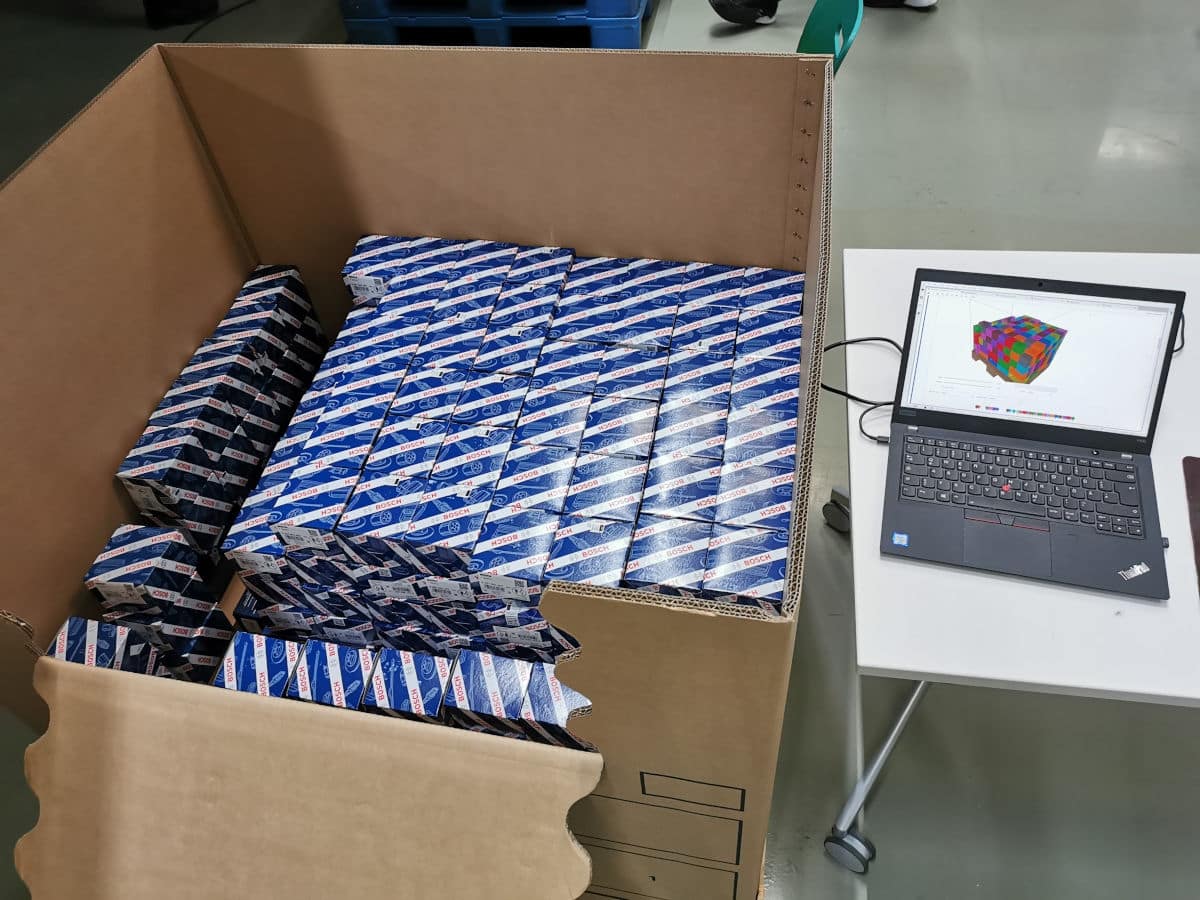
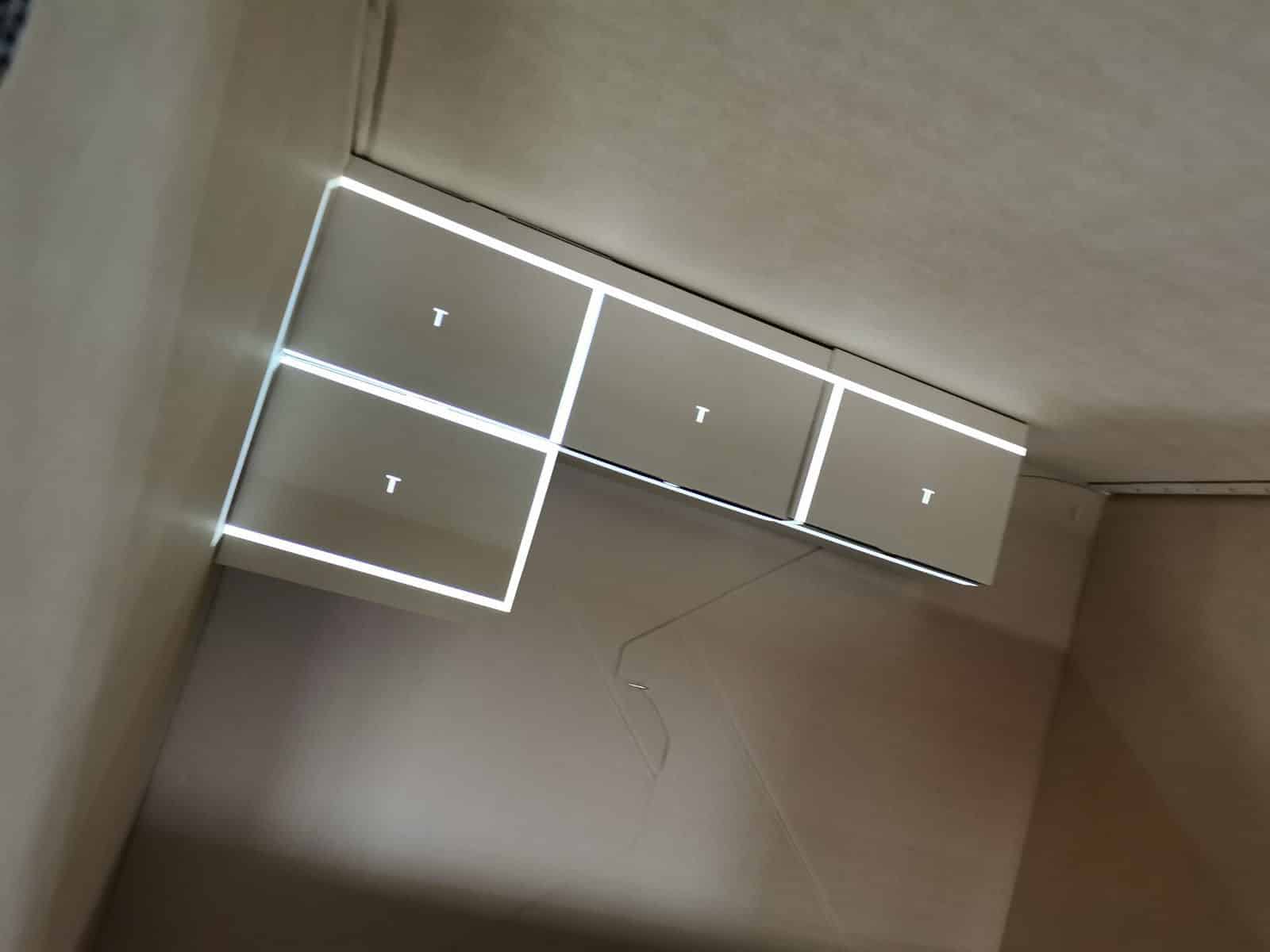
The litmus test for the research project, however, was its practical application: On October 20, 2021, Bosch Automotive Aftermarket made parts of a logistics center at its Karlsruhe site available to the consortium partners to test the developed system using sample orders. A randomly selected customer shipment, which included automotive components such as spark plugs and air filters, was picked and then packed in two different configurations: once using the previously employed algorithm, resulting in seven packaging units—and once using the new algorithm, resulting in six. “By packing real shipments with real goods, we were able to prove that what we calculated actually works—and see firsthand that six packages were indeed packed instead of seven,” explains Daniel Hille.
The demonstrator also provided insight into practical details that hadn’t yet emerged from the simulation: For example, the model had calculated in some cases that the items should be stacked into towers—which, however, are unstable in practice and should be avoided. “All in all, the live test worked very well and yielded valuable insights,” Hille summarizes. Bosch Automotive Aftermarket apparently shares this view: The company was very impressed by the demonstrated cost-saving potential and is currently working with TUP on integrating the solution into production operations. This will initially take place at a single location to evaluate the potential for deployment in other parts of the company.
This report first appeared in the Issue 10/22 of Logistik Heute; the author of the article is Therese Meitinger. The TUP editorial team made minor textual changes and added additional subheadings.
