

First things first: what applies to large companies also applies to small and medium-sized enterprises (SMEs) when it comes to automation projects – a poor process remains a poor process even when automated. Every automation project in intralogistics should start with the processes in order to make them more efficient and resilient. After all, automation is all about being able to execute processes and the tasks they involve successfully, without human intervention.
If you want to increase the level of automation in material flow and warehousing, there are certain objectives associated with this. Generally speaking, these are:
- The optimal use of resources. This applies to funds, time, materials, and labor.
- Increasing efficiency. This can be achieved by automating small sub-processes as well as by automating a comprehensive overall process.
- Minimizing errors. The fewer errors there are, the smoother and more economical the intralogistics processes will be. This aspect is particularly important during peak order periods when your own capacities are approaching their limits.
Intralogistics automation projects are usually a topic that SMEs tend to approach with caution and almost a defensive attitude. This may be because they estimate the costs to be high or because they think that it cannot bring that much benefit; in other words, “automation is expensive and not worth it.” This may have been true in the SME environment in the past, but in the wake of digital progress, automation measures are also becoming increasingly affordable. A more realistic obstacle is the reluctance or unwillingness to invest the work required to scrutinize one’s own processes and examine their optimization potential. For this reason, it is important to remember: First, the processes are examined and optimized. Then they are automated.
Why automate?
If the degree of automation is low, this inevitably means that the proportion of human labor is correspondingly high. Those who are not yet suffering from a shortage of skilled workers will see this pain point develop significantly in the coming years due to demographic trends. And even if there is sufficient manual labor available, working life has become more individualized in that the workforce now consists of full-time employees, various part-time employees, a dwindling number of older, experienced employees, and young workers who are hard to come by. As a result, even more resources must be invested in workforce management – or proactive investments must be made in increasing the level of automation.
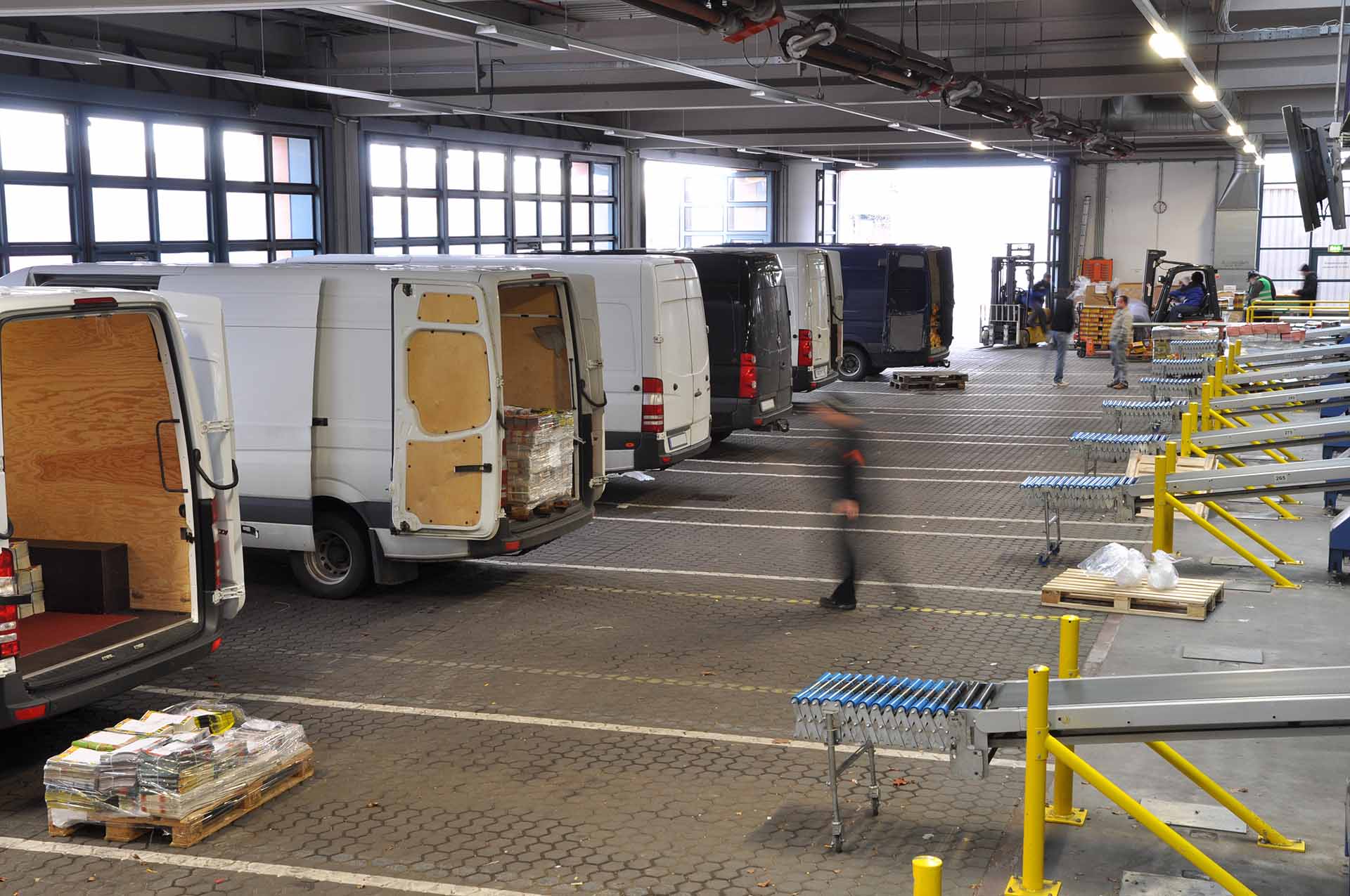
And automation measures do indeed provide a remedy. It is not about the superficial “faster and more for less money” and replacing people with machines, but about making companies – especially the backbone of the German economy, SMEs – more resilient and thus future-proof.
What are the first steps?
Every company will have to clearly define the degree of automation it wants to achieve. This will also show when such an investment will pay for itself (and it will, with lasting success). Regardless of these specific considerations, it is advantageous to introduce a warehouse management system (WMS). Once you have such a basis, numerous other automation options, both small and large, can be derived from it. For example, an WMS makes it easy to introduce MDE, i.e., mobile devices that reduce the error rate during order picking because there are no more transmission errors from handwritten tables that first have to be printed out, carried around the warehouse on a clipboard, and then transferred back into Excel. When it comes to automation, it is generally worthwhile to think beyond physical optimizations that may be impressive, such as driverless transport systems (AGVs) or “goods-to-person” picking in a partially automated system or an automated cube storage solution for a small parts warehouse. Instead, it is worth focusing on the automation of data flows, mainly in terms of investment costs and implementation speed. The storage, access, availability, comparison, and evaluation of the data available and generated in SMEs usually offer a wealth of efficiency gains through automation. Digitizing and automating these intralogistics processes with the help of a warehouse management system forms the foundation of any further automation measures, whether as a standalone solution or as part of an ERP system. Tasks and processes that were previously time-consuming can now be carried out in the blink of an eye.
For which SMEs is an automation project worthwhile?
There is no blanket answer to this question, as SMEs are so diverse and varied. However, each individual company can approach the answer by looking at where the biggest problems lie, such as: the error rate, order throughput times, space utilization, or delivery readiness.
In general, automation projects in SMEs should focus on simplifying the overall management and control of the warehouse. This reduces errors and makes processes more efficient. Automation must always mean optimization, because it is definitely not just a matter of replacing human workers with machines and robots. The goal is to optimize warehouse inventory, tie up less capital, increase inventory turnover, shorten delivery times, and better deploy employees.
Conclusion
In summary, SMEs should definitely examine their automation potential, because automation projects are worthwhile and make a company more resilient. As mentioned at the beginning, this starts with optimizing intralogistics processes.
This article appeared in the german trade magazine “f+h fördern und heben” in issue 10/2024.
