

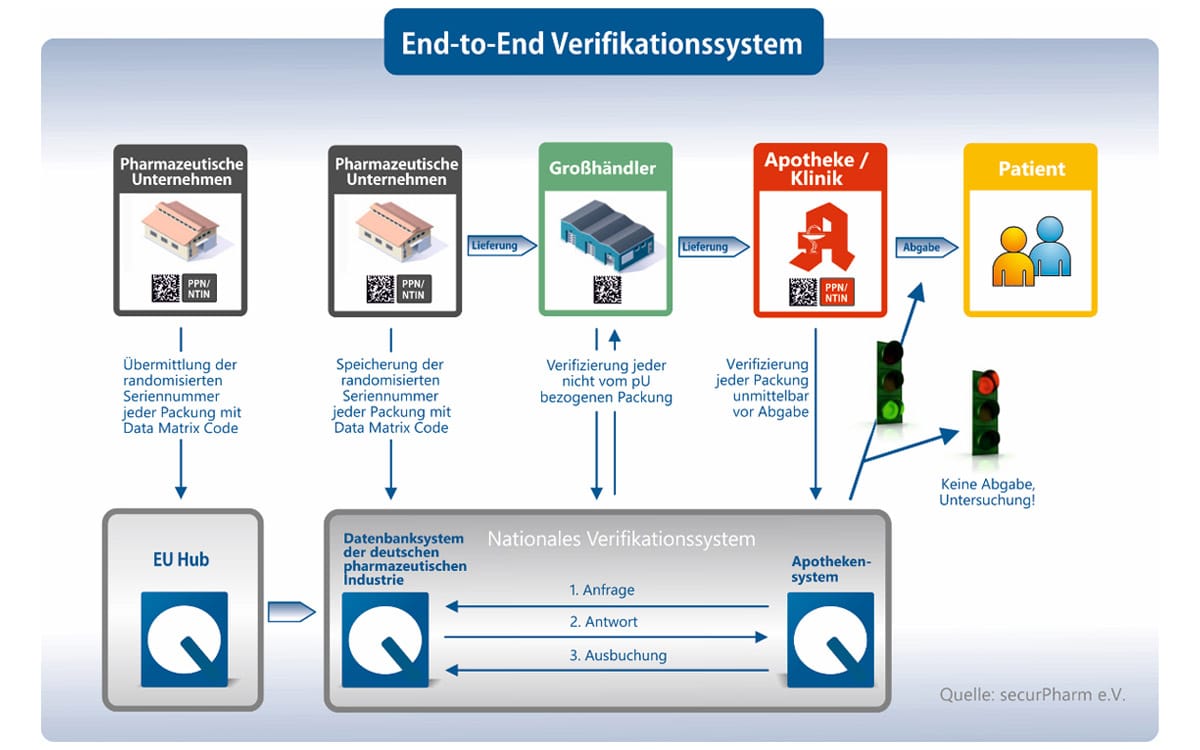
To better protect patients, as of February 9, 2019, prescription medications are required to include additional security features in their packaging and are automatically stored online in the central drug security system—SecurPharm. For the wholesale and service company GLS Logistik GmbH & CO KG Dental Handel KG (GLS Logistik), the software manufacturer TUP (TUP) from Stutensee successfully implemented the integration with the complex pharmacy server on schedule—taking into account the Europe-wide verification system and the countless adjustments within the Warehouse Management System (WMS).
Return Verification Already at Goods Receiving
In addition to the packaging, process workflows at GLS Logistik naturally also had to be adapted using software. For example, there is no specific workstation for adding prescription items to inventory. They can optionally be verified and put into storage right at the goods receiving station. This also applies to returns. “Within ten days, it’s possible to reverse a write-off within the same facility. This allows returned items to be re-entered into inventory or medications that were accidentally written off to be re-entered into the system,” Sebastian Mohn explains further—provided the end customer did not accept the goods or was not at home. “In doing so, we worked closely with GLS management to ensure that the existing data entry process required minimal adjustment—partly because we didn’t know in advance what the system’s response times would be in live operation. Queries to the SecurPharm system therefore run asynchronously; this way, the GLS WMS doesn’t have to wait for a response from the pharmacy server.”
SecurPharm: Regulated Authentication Procedure
The biggest change to the GLS WMS concerned the interface to the SecurPharm pharmacy server. Because security-relevant information is exchanged there, a strictly regulated authentication procedure had to be implemented. Every location authorized to issue medications must first register, and individual security certificates have been rolled out. Using these, an authentication system first requests a token that is valid for 24 hours. This token, along with the respective certificate, is used to access the pharmacy server; only then can the necessary verifications and medication issuances take place.
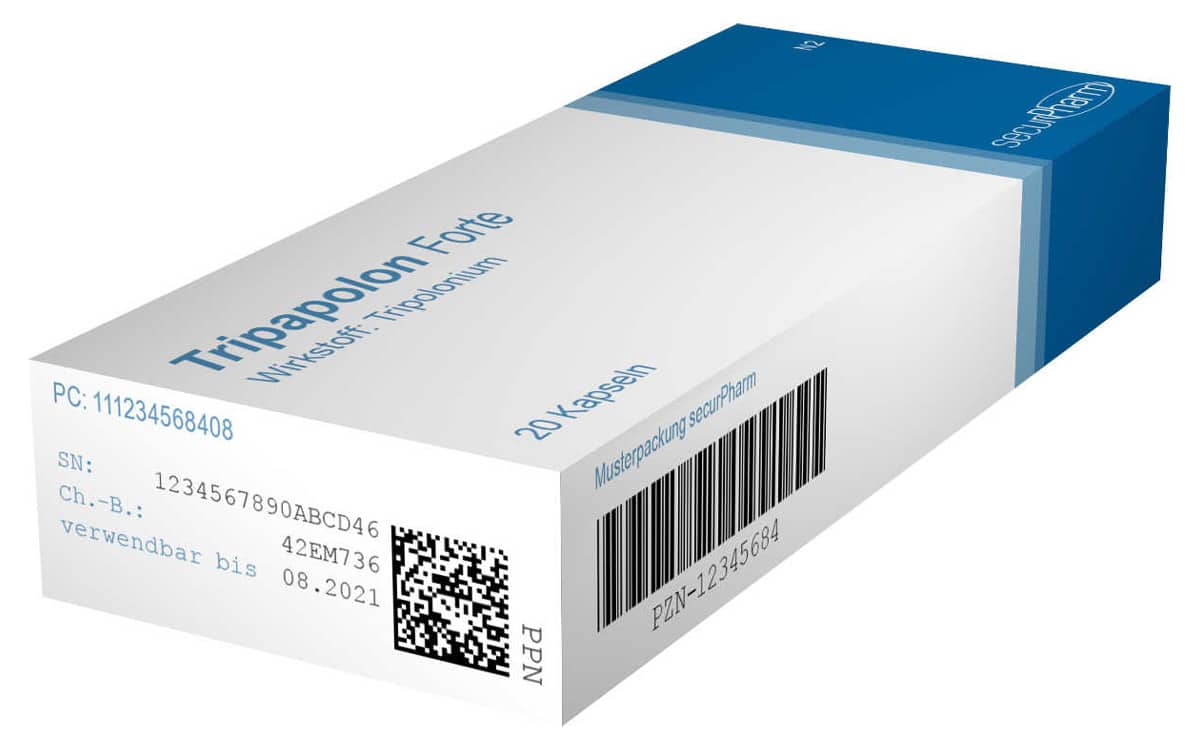
To ensure that the corresponding medication write-offs are picked correctly according to orders, not only was the MDE software adapted to the new requirements, but GLS Logistik also decided to adopt new handheld devices right away. “The most attractive solution for GLS Logistik was to rely on new MDE devices right from the start of the project phase,” said Fabian Rudolph, Operations Manager at GLS Logistik. “On the one hand, we had to work with TUP to develop the MDE software so that we could ultimately read 2D barcodes; on the other hand, we had to account for the manual entry of the unique identifier. We ultimately chose handheld devices from Motorola.” “And thanks to our supplier network, we were able to provide MDEs with 2D scanner technology in no time—an all-inclusive service from TUP, so to speak,” concludes Oliver Chimbo, project manager at TUP. But it also had to be done quickly; the implementation timeline was tight, at just under two months.
