


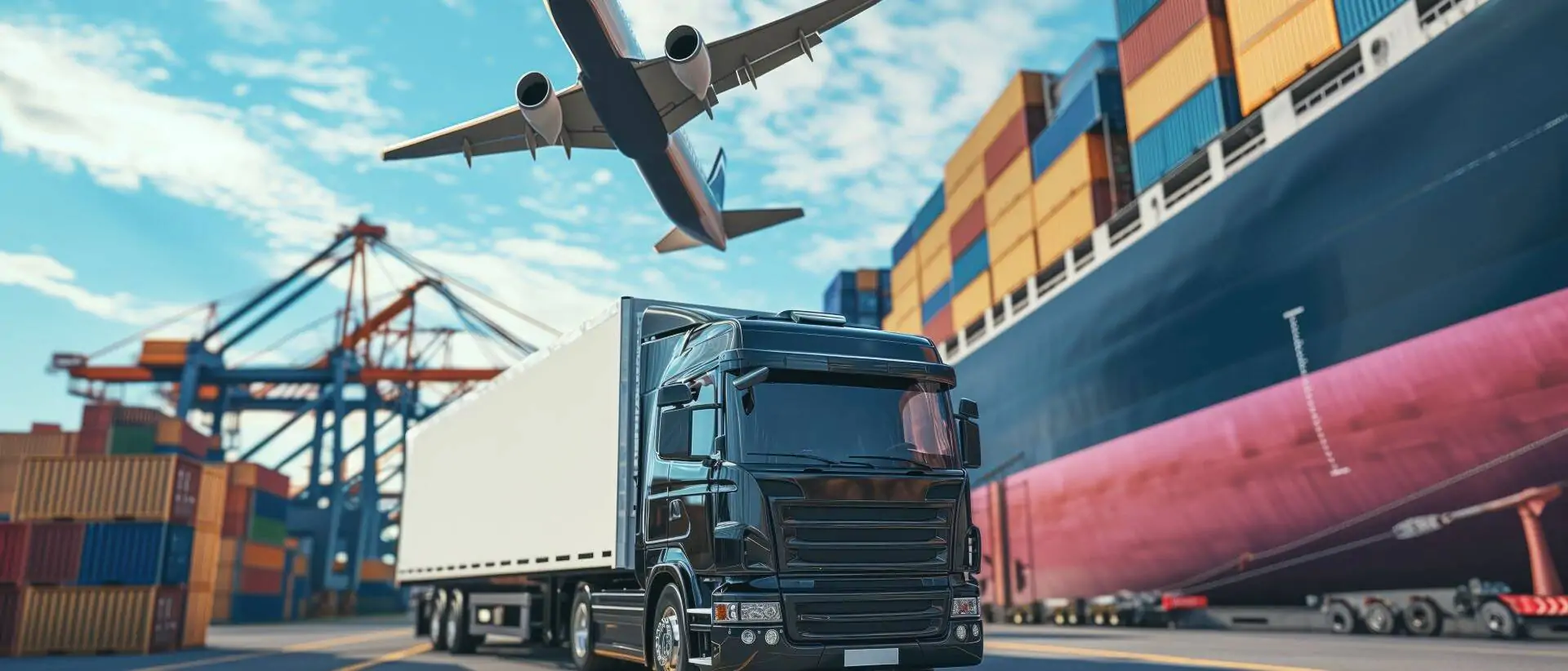
Intermodal transport refers to the transport of goods using at least two different modes of transportation within a continuous transport chain, without the goods themselves being transshipped when changing modes of transportation. Instead, the cargo remains in the same loading unit—such as a container, swap body, or semi-trailer—throughout the entire transport process. The transition between different modes of transport—such as road, rail, inland waterway, or ocean vessel—is accomplished by transferring the entire loading unit. The goal of intermodal transport is to combine the respective strengths of the individual modes of transport in order to make transport processes more economical, efficient, and environmentally friendly.
Intermodal transport is an essential component of modern logistics systems and international freight traffic. It is becoming increasingly important, particularly in global trade, as it enables the integration of different transport infrastructures and ensures an efficient flow of goods over long distances. The standardization of loading units—particularly through the ISO container—has significantly driven the development of intermodal transport chains.
Definition
The term “intermodal” is derived from the Latin inter (“between”) and modus (“type” or “manner”) and describes the transition between different modes of transport within a single transport operation. In contrast to multimodal transport, intermodal transport places particular emphasis on the fact that the goods remain in the same loading unit throughout the entire transport process. This avoids additional handling operations involving the goods themselves.
Multimodal transport is often used as an umbrella term and generally describes the use of multiple modes of transport within a single transport order. Intermodal transport thus represents a specific form of multimodal transport. In addition, there is the concept of combined transport, which is used particularly in European freight transport. In combined transport, the main leg of the journey is carried out as much as possible using environmentally friendly modes of transport such as rail or waterways, while only the short-distance pre- and post-carriage segments are carried out by road.
Development
The origins of intermodal transport date back to the 19th century, when the first standardized containers and swap bodies were developed for rail transport. However, the introduction of standardized freight containers in the 1950s and 1960s provided a decisive boost to its development. Containerization significantly simplified transshipment between ships, rail, and trucks, reducing both transit times and handling costs.
With the growth of world trade, globalization, and the expansion of international supply chains, intermodal transport has become a central component of modern logistics. Today, intermodal networks connect seaports, freight hubs, inland ports, rail terminals, and logistics centers on every continent.
Modes of Transport
Intermodal transport combines different modes of transport according to their respective advantages.
Road transport often handles the pre-carriage from the shipper to the transshipment terminal as well as the post-carriage from the destination terminal to the recipient. Its greatest strength lies in its high flexibility and comprehensive coverage.
Rail is particularly well-suited for transporting large volumes of goods over medium and long distances. It is characterized by high transport capacity, comparatively low energy costs per metric ton-kilometer, and a low environmental impact.
Maritime transport forms the backbone of international trade. Container ships transport the vast majority of global general cargo traffic between continents and enable the cost-effective transport of large volumes of goods.
Inland waterway transport complements intermodal transport chains, particularly along major rivers and canals. It is suitable for heavy and bulky goods and has low energy consumption per metric ton transported.
In certain cases, air transport can also be part of intermodal transport chains. Due to its high speed, it is primarily used for time-sensitive or particularly high-value goods. However, because of its comparatively high transport costs and emissions, it plays a minor role in terms of volume.
Loading Units
Standardized loading units form the basis of intermodal transport. These include, in particular:
- ISO containers of various sizes (e.g., 20- and 40-foot containers),
- swap bodies,
- craneable semi-trailers,
- specialized containers for refrigerated, tank, or hazardous materials transport.
Standardization allows the same loading unit to be used across different modes of transport and enables rapid transshipment at specially equipped terminals. This helps reduce transit times and minimize damage to goods.
Transshipment Terminals
Transshipment terminals are a key element of intermodal transport chains. They facilitate the transfer of loading units between different modes of transport. Various transshipment technologies are used here, including container gantry cranes, portal cranes, reach stackers, and specialized loading equipment for semi-trailers.
Modern terminals often feature digital control systems that coordinate the arrival, storage, and onward transport of cargo units. This helps reduce waiting times and makes transport processes more efficient.
Advantages of Intermodal Transport
Intermodal transport offers numerous economic and environmental benefits.
By combining different modes of transport, shipping costs can be reduced, especially over long distances. Shifting a large portion of freight to rail or waterways also reduces fuel consumption and greenhouse gas emissions. At the same time, it eases the strain on the road network, which can help reduce traffic congestion, road wear, and the risk of accidents.
Another advantage is the high level of security for the goods being transported. Since the goods remain in the same loading unit throughout the entire transport process, the risk of damage, theft, or loss is reduced. In addition, standardized containers enable largely automated handling.
Challenges
Despite its advantages, intermodal transport places high demands on planning and organization. Coordinating different modes of transport, operators, and infrastructure providers requires precise coordination.
Particular challenges arise from differing schedules, terminal capacities, technical standards, and national regulations. Delays in one mode of transport can affect the entire transport chain. Similarly, bottlenecks at transshipment terminals or overloaded rail lines can impair the performance of intermodal systems.
Furthermore, intermodal transport requires significant investment in infrastructure, digital information systems, and appropriate transshipment technology.
Digitalization
Digitalization is playing an increasingly important role in the further development of intermodal transport. Modern transport management systems enable the planning, monitoring, and control of complex transport chains in real time. With the help of GPS tracking, sensor technology, and automatic data collection, the position, condition, and estimated time of arrival of cargo units can be continuously tracked.
Electronic freight documents, digital customs procedures, and standardized data interfaces facilitate the exchange of information between the companies involved. Artificial intelligence and data-driven forecasting methods also support the optimization of routes, capacity utilization, and terminal operations.
Significance for Sustainability
Intermodal transport is considered a key component of a sustainable transportation policy. In particular, shifting freight transport from road to rail and waterways helps reduce energy consumption as well as emissions of carbon dioxide and air pollutants.
Many countries are therefore promoting the expansion of intermodal transport networks through investments in freight hubs, rail infrastructure, and port facilities.
International strategies for achieving climate protection goals also call for greater use of intermodal transport solutions.
Areas of Application
Intermodal transport is used in numerous economic sectors. These include, among others, international container transport, the automotive industry, retail, the chemical industry, mechanical engineering, and the transport of agricultural products. E-commerce is also increasingly utilizing intermodal transport chains to efficiently move goods between production sites, distribution centers, and end customers.
Particularly in international seaport hinterland transport, intermodal transport forms the basis for connecting major seaports to national and international economic regions.
Summary
Intermodal transport is a central concept in modern freight logistics. By combining different modes of transport while keeping goods in a standardized loading unit, it combines economic efficiency with environmental benefits. Standardized containers, high-capacity transshipment terminals, and digital information systems enable a seamless transition between road, rail, and waterways. Given the growing global flow of goods and increasing demands for sustainability and resource efficiency, the importance of intermodal transport is expected to continue to grow. It is therefore considered an essential component of sustainable logistics and transportation systems.
